 blog
Easy Weeknight Dinner Ideas for Families
Table of Contents
- Why Weeknight Dinners Matter for Busy Families
- 30-Minute Family Dinners That Actually Work
- One-Pot Meals and Sheet-Pan Dinners for Minimal Cleanup
- Easy Dinners for Picky Eaters
- Healthy Family Dinner Recipes Everyone Will Eat
- Budget-Friendly Family Meals Without Sacrificing Quality
- Make-Ahead Strategies and Weekly Meal Planning
- Conclusion
- Frequently Asked Questions
Last Updated: October 9, 2026
Why Weeknight Dinners Matter for Busy Families
Getting dinner on the table after a long day feels impossible. Between work, school, and activities, most families are exhausted by 5 p.m., but drive-throughs aren't the answer.
Weeknight dinners bring your family together, and they don't have to be complicated.
At Leo's Gourmet Market, we help families enjoy quality meals without the hassle: freshly prepared entrées in oven-safe containers with clear heating instructions.
The key is easy weeknight dinner ideas that work for your real life, meals that taste homemade, come together quickly, and get eaten by everyone.
30-Minute Family Dinners That Actually Work
The best family dinners are ready in 30 minutes or less.

Pasta is the weeknight workhorse: lemon chicken pasta takes 25 minutes; ground beef with marinara over noodles takes under 20.
Sheet-pan dinners require minimal cleanup: arrange protein and vegetables on one pan, roast at 400°F for 20-25 minutes. Try salmon with roasted broccoli and potatoes.
Tacos and quesadillas are deceptively simple: brown seasoned ground beef, set out toppings, and let everyone build their own, most take 15 minutes.
One-Pot Meals and Sheet-Pan Dinners for Minimal Cleanup
The best part of one-pot dinners is the cleanup, everything cooks in a single vessel.
Slow-cooker recipes are the ultimate easy weeknight dinner solution. Dump ingredients in the morning, set it to low, and come home to a fully cooked meal.
One-pot pasta cooks pasta and sauce together: boil broth, add pasta, vegetables, and protein, then simmer until tender.
Casseroles deserve more credit as easy weeknight dinners. Tater tot casserole, baked pasta, and cheeseburger pie come together in 30-40 minutes: mix in one dish, bake, and serve.
Sheet-pan dinners are one-pot meals that use your oven instead of the stovetop.
Easy Dinners for Picky Eaters
Picky eaters are real, and the solution isn't forcing them to eat what everyone else eats.
Build-your-own meals give picky eaters control. Taco night, build-your-own pizza, grain bowls, and burrito bowls let kids choose what goes on their plate.
Mild versions of family favorites work better than separate meals. Make the main dish without spice, then add hot sauce to adult portions.
Ramen noodle salad is surprisingly popular with kids. Combine cooked ramen with shredded cabbage, carrots, and a simple dressing, then add grilled chicken for protein.
Healthy Family Dinner Recipes Everyone Will Eat
Healthy dinners don't have to taste like punishment or be a separate meal. The trick is making vegetables taste good enough that people want to eat them, and building in enough flexibility that one recipe serves a vegetarian, a gluten-free eater, and a picky seven-year-old.
Roasted vegetables beat steamed every time
Heat brings out natural sweetness and creates crispy edges.
Dietary swaps: This method is naturally vegetarian, vegan, gluten-free, and dairy-free. If you're cooking for a dairy-free household, skip the Parmesan finish and use nutritional yeast instead.
Serving-size scaling: One pound of vegetables feeds about four as a side. For a family of six, use 1½ pounds and add 5 minutes to the roast time, or use two sheet pans and rotate them halfway through.
Salmon is one of the easiest healthy proteins
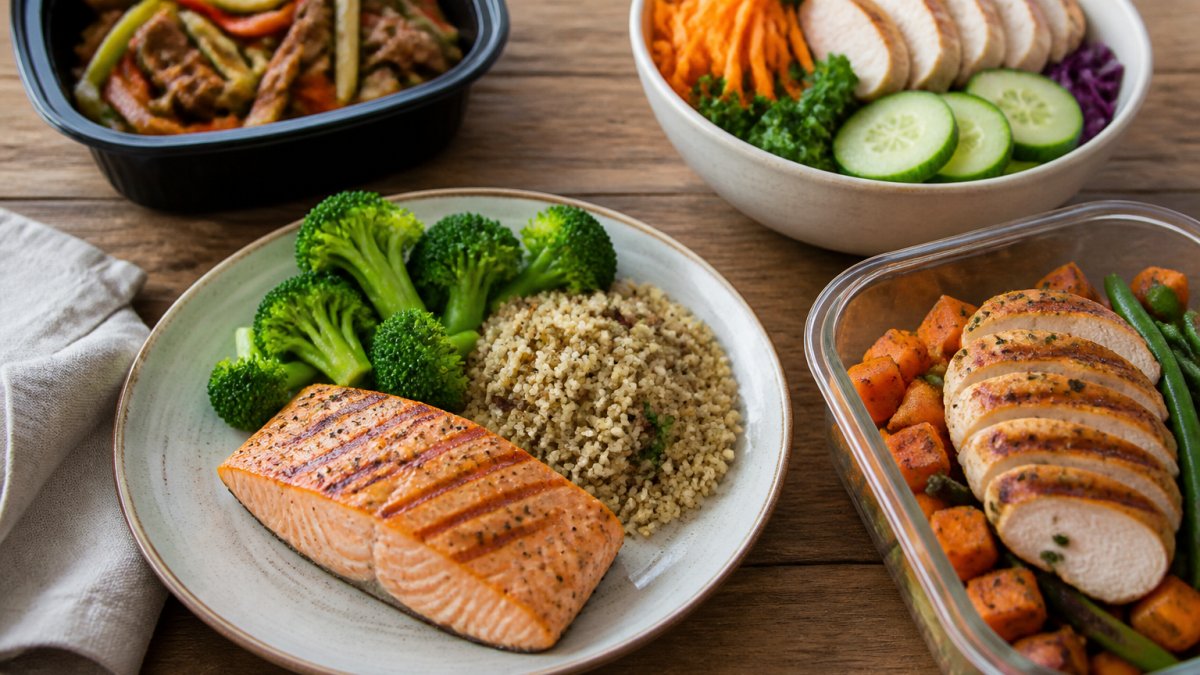
Salmon cooks in 12 to 15 minutes at 400°F, tastes delicious with minimal seasoning, and provides omega-3s for growing brains.
Dietary swaps: For a gluten-free version, skip any soy-based glaze and use a lemon-butter or olive-oil-and-herb rub. For dairy-free, use olive oil instead of butter. Salmon is naturally gluten-free and dairy-free on its own.
Serving-size scaling: Plan on 4 to 6 ounces of raw salmon per person. A 1-pound fillet feeds two adults and two small children; a 2-pound fillet feeds four adults with leftovers for one lunch.
Grain bowls feel like a complete meal because they are
Dietary swaps: Use quinoa or brown rice for a gluten-free bowl (farro contains gluten). Use tofu, chickpeas, or white beans instead of chicken for a vegetarian or vegan bowl. Skip cheese and creamy dressings for dairy-free.
Serving-size scaling: Cook ½ cup of dry grain per adult and ¼ cup per child. A single batch of 2 cups dry grain feeds a family of four with enough left over for one lunch the next day.
Baked meatballs are secretly healthy
Mix ground turkey or lean beef with breadcrumbs, egg, and seasonings, then bake instead of frying. Serve with marinara and pasta, or in a grain bowl. Bake at 400°F for 18 to 22 minutes.
Dietary swaps: Use gluten-free breadcrumbs or crushed gluten-free oats for a gluten-free version. Use a flax egg (1 tablespoon ground flaxseed plus 3 tablespoons water per egg) for an egg-free version. Skip the Parmesan for dairy-free.
TO SEE OUR DAILY MENU CLICK HERE!(CONCORD COMMONS LOCATION ONLY) →
Serving-size scaling: One pound of ground meat makes about 20 golf-ball-sized meatballs, which feeds four as a main. Double the batch and freeze half, baked meatballs freeze beautifully for up to three months.
Storage and leftovers
Roasted vegetables keep refrigerated up to four days and reheat at 375°F for 8 to 10 minutes. Cooked salmon is best within two days; flake leftovers into salads or grain bowls. Cooked grains keep five days refrigerated or three months frozen. Baked meatballs keep four days refrigerated or three months frozen; reheat in marinara on the stovetop.
Budget-Friendly Family Meals Without Sacrificing Quality
Quality ingredients don't require expensive grocery bills. Smart shopping and a few habits stretch every dollar, here's how to feed a family of four for less than a single takeout order.
Buy whole proteins and cook them yourself
A whole chicken is cheaper per pound than breasts.
Dietary swaps: Whole roasted chicken is naturally gluten-free and dairy-free. For a vegetarian protein at a similar price point, dried lentils and beans are the cheapest per-gram protein in the store.
Serving-size scaling: One 4-pound chicken feeds four people for one meal with leftovers. For a family of six, roast two birds at once, the oven is already on, so the second bird costs almost nothing in extra energy.
Dried beans and lentils are incredibly affordable
A pound of dried beans makes about 6 cups cooked, the equivalent of four 15-ounce cans.
Dietary swaps: Beans and lentils are naturally vegetarian, vegan, gluten-free, and dairy-free. They're the single most flexible budget protein in the pantry.
Serving-size scaling: Plan on ½ cup cooked beans per adult and ¼ cup per child. One pound of dried beans covers four to six meals for a family of four.
Storage: Cooked beans keep in the refrigerator for up to five days or in the freezer for up to three months.
Frozen vegetables are cheaper than fresh and just as nutritious
They're picked at peak ripeness and frozen immediately, locking in nutrients. Use them in stir-fries, one-pot meals, and casseroles. A bag of frozen broccoli or mixed vegetables typically costs less than half of out-of-season fresh, with zero waste.
Dietary swaps: Plain frozen vegetables without sauces or seasonings are naturally gluten-free, dairy-free, and vegan. Check labels on frozen vegetable blends that include pasta or cheese sauce.
Serving-size scaling: One 12-ounce bag of frozen vegetables serves about four as a side. For a family of six, use two bags and add 2 to 3 minutes to the cook time.
Seasonal produce costs less because supply is abundant
Buy what's in season and save. Winter squash, root vegetables, and citrus are budget-friendly in cold months; summer brings affordable tomatoes, zucchini, and peppers. In-season produce can cost two to three times less.
Storage: Winter squash keeps for one to three months in a cool, dark place. Root vegetables like carrots and potatoes keep for weeks in the refrigerator. Summer tomatoes and zucchini are best used within a week.
Build a pantry that makes cheap meals automatic
Keep these on hand for a budget dinner: rice, dried pasta, canned tomatoes, canned beans, dried lentils, frozen vegetables, onions, garlic, olive oil, and basic seasonings. A stocked pantry turns a $3 bag of pasta and a $2 can of tomatoes into a meal that feeds four for under $2 per serving.
Make-Ahead Strategies and Weekly Meal Planning
Planning ahead transforms weeknight dinners from stressful to manageable, simple strategies work better than complex ones.
Cook once, eat twice. When you're making dinner anyway, double the recipe, chili, casseroles, and one-pot meals reheat beautifully.
Prep components on Sunday, not full meals: chop vegetables, cook grains, and marinate proteins.
Freezer meals work when they're simple. Casseroles, soups, chili, and meatballs all freeze well.
Leo's Gourmet Market makes meal planning easier. Our daily rotating menu offers fresh inspiration without the work.
Leftovers extend your meals further: roasted chicken becomes chicken salad, pasta becomes cold pasta salad, rice and vegetables become fried rice.
Conclusion
Easy weeknight dinner ideas don't have to come from complicated recipes or expensive ingredients. Your family needs meals that fit your real life: fast, satisfying, and actually eaten without complaint. Whether you're building tacos, roasting sheet-pan dinners, or slow-cooking a one-pot meal, the goal is real food on the table without burning yourself out.
Leo's Gourmet Market makes this easier. Our freshly prepared entrées come ready to heat, with clear instructions and quality ingredients you can trust. Our handmade sausage, fresh mozzarella, and artisan breads round out meals you'll feel good serving your family.
Frequently Asked Questions
What are some easy weeknight dinner ideas that don't take more than 30 minutes?
Stir-fries, pasta dishes, sheet-pan dinners, and one-pot meals are your fastest options. Chicken stir-fries with pre-cut vegetables, lemon pasta with salmon, and ground beef tacos come together in under 30 minutes. The key is choosing recipes with minimal prep and using quality ingredients so the food tastes homemade, not rushed. Many families also turn to chef-prepared options like those from local gourmet markets for nights when cooking feels impossible.
How can I make weeknight dinners easier for a busy family?
Plan your meals weekly so you're not deciding at 5 p.m. what to cook. Buy pre-cut vegetables, use rotisserie chicken, and stock pantry staples like pasta, canned tomatoes, and grains. Batch-cook proteins on Sunday for quick assembly during the week. Consider ready-to-heat meals from quality local sources to reduce stress on the busiest nights. Prep time and cook time matter, choose recipes that fit your schedule, not the other way around.
What should I cook for picky eaters at dinner?
Build meals around foods your kids already like, then add one new element. Tacos, quesadillas, and pasta bakes work well because kids can customize their plates. Serve proteins and vegetables separately so picky eaters can choose. Mild flavors, familiar shapes, and foods they can help prepare often win over resistant eaters. Avoid forcing new foods, repeated exposure in a pressure-free setting works better than battles at the table.
Are store-bought prepared dinners really cheaper than cooking at home?
It depends on your time value and what you're comparing. Buying individual ingredients for a family meal costs less per serving than a restaurant, but prepared meals from quality markets save you time, stress, and cleanup. Many families find the trade-off worth it on busy weeks. Compare the total cost of ingredients, your time, and energy, sometimes convenience costs less than the stress of a rushed home-cooked meal.