 blog
Order Fresh Artisan Bread Online: A Guide
Table of Contents
- Why Order Fresh Artisan Bread Online
- Types of Artisan Bread Available for Online Ordering
- Artisan Bread for Sandwiches: Choosing the Right Loaf
- How to Store Artisan Bread After Delivery
- Artisan Bread for Entertaining: Ideas and Selection
- What Makes Online-Ordered Bread Fresh and Flavorful
- How to Place Your Order and Get Bread Delivered
- Frequently Asked Questions
Last Updated: October 14, 2026
Why Order Fresh Artisan Bread Online
Ordering fresh artisan bread online lets busy households access high-quality baked goods without a bakery trip.
The appeal goes beyond convenience. Artisan breads made from scratch with long fermentation and stone-ground flour develop deeper flavor and better texture than mass-produced alternatives.
Ordering artisan bread also saves you from the Sunday prep trap: no baking session, no ingredients committed to a loaf that may not turn out. Instead, you get consistent, professionally executed bread ready when you are.
Types of Artisan Bread Available for Online Ordering
When you order fresh artisan bread online, you'll encounter several categories, each suited to different purposes: sandwiches, entertaining, or everyday eating.
Sourdough and Long-Fermentation Varieties
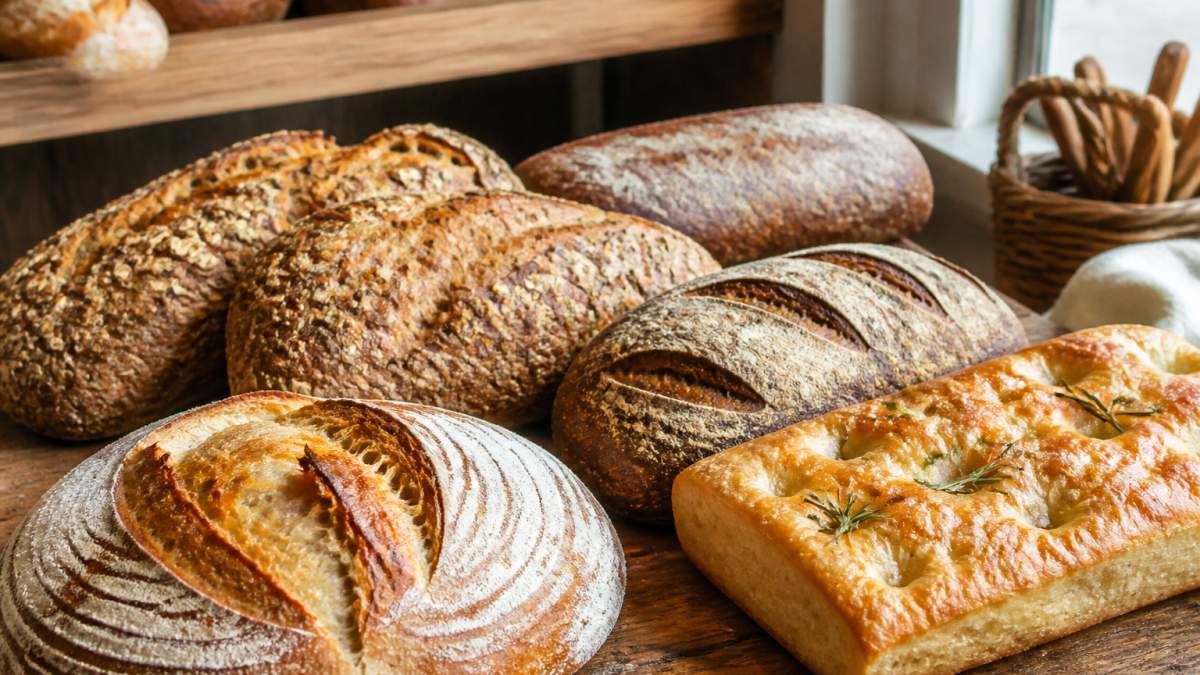
Sourdough is the foundation of artisan bread culture. These loaves ferment 12 to 48 hours, developing their characteristic tang and complex flavor. Long fermentation breaks down gluten naturally, making sourdough easier to digest than quickly-risen bread.
When you order fresh artisan bread online and choose sourdough, you get a loaf that improves with age in some ways: day one is peak freshness, while days two and three soften the crust but deepen the flavor.
Other long-fermentation varieties include whole grain sourdoughs, combining fermentation's tang with the nutty depth of wheat, rye, or spelt. They ferment longer but reward the patience with strong flavor and superior nutrition.
Whole Grain and Specialty Loaves
Whole grain breads deliver more fiber and minerals than white bread but need different techniques for the right texture. A well-made whole grain loaf balances density with openness, substantial without being heavy.
Specialty loaves include focaccia (a flatbread rich with olive oil and herbs), rye (dense and slightly sour), and regional varieties like ciabatta. Some producers offer bread bowls, dinner rolls, and breadsticks. When you order fresh artisan bread online, specialty options let you match bread to specific meals rather than buying one loaf for everything.
Artisan Bread for Sandwiches: Choosing the Right Loaf
Not all artisan breads work equally well for sandwiches. The right choice depends on what you're building.
For deli sandwiches with substantial fillings, choose a sturdy crumb and defined crust, such as sourdough or hearty whole grain.
For lighter sandwiches (vegetables, soft cheeses, spreads), a more delicate crumb works better. French bread or ciabatta offers enough structure with a softer interior that doesn't overpower mild fillings.
When you order fresh artisan bread online for sandwiches, ask about loaf size and thickness. A 1-pound loaf yields roughly 10-12 slices; a 2-pound loaf, 16-20. Half-inch slices hold up to wet fillings; thinner slices suit open-faced presentations.
How to Store Artisan Bread After Delivery
Artisan bread arrives fresh, but storage determines how long it stays that way. Fresh bread's enemies are moisture loss and mold, and you need to manage both.
On day one, leave your bread uncovered or in a paper bag at room temperature. The crust firms as it cools, and the exposure prevents mold-causing condensation.
After day two, move the loaf to a bread box or paper bag in a cool, dry spot. Never refrigerate artisan bread; cold accelerates staling.
For storage beyond a week, freezing is best. Wrapped tightly in plastic wrap then foil, artisan bread keeps up to three months. Thaw at room temperature for 2-3 hours before serving.
Artisan Bread for Entertaining: Ideas and Selection
When hosting, artisan bread becomes a centerpiece, and the right selection elevates a simple meal.
For casual gatherings, dinner rolls and breadsticks offer variety without slicing.
For formal entertaining, a single stunning loaf, perhaps a large sourdough or whole grain, on a bread board with a bread knife invites guests to serve themselves, feeling intentional and artisanal.
Bread soup bowls add theater to a simple soup course: functional, surprising, and no separate dishware needed. Pair them with smooth soups (tomato bisque, butternut squash, creamy mushroom) rather than chunky varieties.
TO SEE OUR DAILY MENU CLICK HERE!(CONCORD COMMONS LOCATION ONLY) →
When you order fresh artisan bread online for an event, time it carefully: bread baked the morning of your gathering arrives at peak freshness.
What Makes Online-Ordered Bread Fresh and Flavorful
Ingredients and technique decide how good a loaf can be; packaging and shipping decide how good it still is when it reaches you. Most bakery pages stop at the first half. Here's the second half, which separates a great online order from a disappointing one.
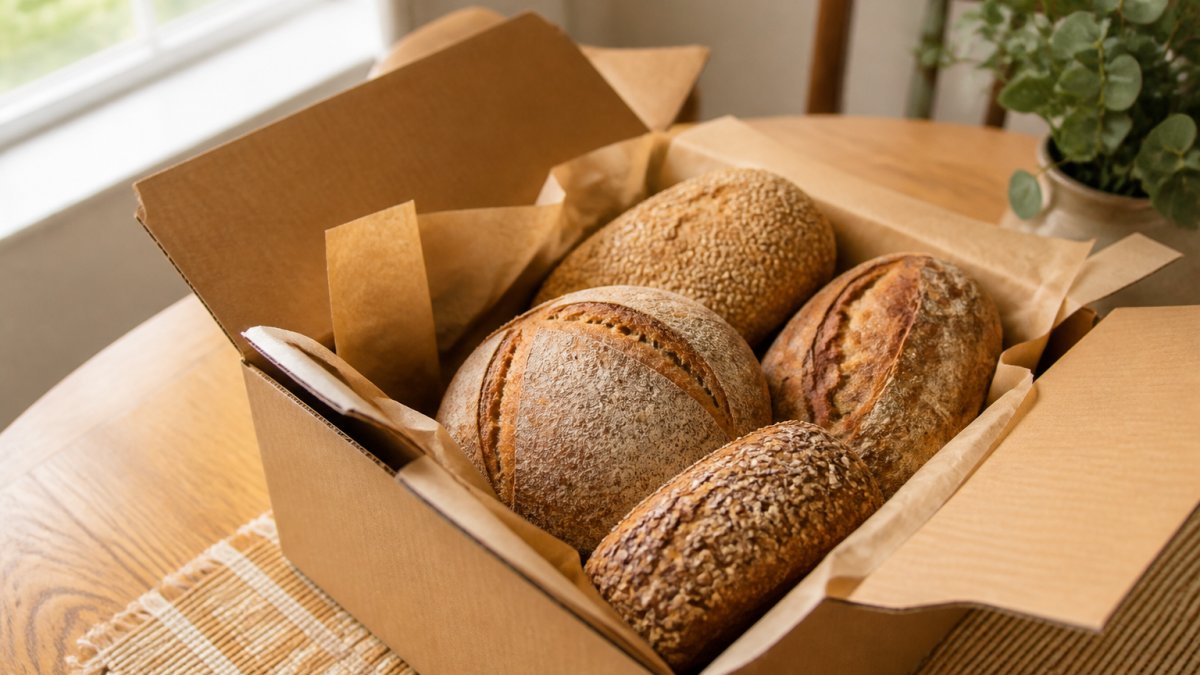
How shipped bread is packaged
Artisan bread is perishable, so shippers use a few standard approaches:
- Paper or breathable wrap inside a box. The loaf is wrapped in paper (sometimes waxed) so it can release moisture, then boxed. This works for short transit times and is common for local and regional delivery.
- Insulated liner with a cold pack. For warmer months or longer transit, the loaf goes into an insulated liner with a gel pack. The goal is to keep the bread from overheating and sweating, not to freeze it.
- Vacuum or tight plastic wrap for frozen loaves. Bread shipped frozen is wrapped tightly to prevent freezer burn, then packed with dry ice or heavy gel packs for a multi-day transit.
- Cushioning. Because crust is fragile, good shippers add padding or a molded insert so the loaf doesn't rattle and crack in transit.
Fresh-shipped vs. frozen-shipped
This is the biggest quality fork in online bread ordering.
Fresh-shipped bread is baked, cooled, and sent overnight or two-day. It arrives within a day or two of baking, at or near peak, but costs more to ship and has a shorter usable window once it lands.
Frozen-shipped bread is baked, frozen, and sent on a slower, cheaper service. It arrives frozen or partially thawed and keeps for weeks.
Neither is automatically better: fresh-shipped wins if you'll eat the loaf within a couple of days; frozen-shipped wins if you want to stock up or can't be home for delivery.
Restoring crust and crumb after delivery
A loaf that traveled for a day or two will have softened crust. You can bring most of it back:
- Oven refresh. Heat the oven to about 350°F. Briefly run the loaf under water (or spritz it), then bake 5-10 minutes. The moisture turns to steam and re-crisps the crust, the most reliable method for a whole or half loaf.
- Sliced bread. Wrap slices in foil and warm about 5 minutes at 350°F, or toast directly. Foil keeps the interior from drying while the surface heats.
- Frozen bread. Thaw at room temperature for a couple of hours, then refresh in the oven, or go straight from frozen to a 350°F oven, adding a few minutes.
- What you can't fix. Once a loaf is genuinely stale (dry and crumbly throughout), heat won't reverse it. Use it for croutons, breadcrumbs, or panzanella.
Shelf life, realistically
A fresh artisan loaf is best within about 48 hours of baking, then declines steadily. A few practical rules:
- Room temperature: 2-4 days in a paper bag or bread box. Never refrigerate; cold accelerates staling.
- Freezer: up to three months if wrapped tightly (plastic then foil, or a heavy freezer bag with air pressed out).
- Sliced before freezing: slice first so you can pull out single pieces without thawing the whole loaf.
How to Place Your Order and Get Bread Delivered
Most ranking pages for this query are single-bakery storefronts showing one menu and one checkout. They rarely help you compare how online bread ordering works across seller types, yet that comparison decides whether your loaf arrives crackling or stale. Start there.
The four seller types you'll run into
Local bakery with online ordering and pickup. You order on the bakery's site, choose a pickup window, and collect the bread the day it's baked, the fastest path from oven to table.
Local bakery with regional delivery. Same bakery, but with its own drivers or a courier to nearby zip codes. Delivery is typically same-day or next-day.
National shipper (bakery or marketplace). The bread is baked, cooled, packaged, and handed to a carrier. This is the only option outside a local bakery's radius, and where the freshness variables multiply, see the shipping section below.
Grocery and meal-kit add-ons. Some grocery delivery services and meal kits let you add a loaf to an existing order.
What to check before you click buy
- Bake-to-ship timing. Check whether the loaf is baked the day it ships or baked in advance and frozen. This detail predicts final quality more than any other.
- Shipping method and transit time. Overnight and two-day service are the norm for perishable bread. Multi-day ground transit is a red flag for a fresh loaf unless it ships frozen.
- Cutoff times. Many bakeries have an order cutoff (often the evening before, or a set time like 2 p.m. the prior day) to plan the bake. Miss it and your order rolls to the next bake day.
- Minimum orders. Local delivery often carries a minimum; national shippers may waive it above a certain cart size.
- Substitutions. Because artisan bakeries bake in small batches, varieties sell out. Find out whether the seller substitutes a similar loaf or refunds the item.
- Delivery-day instructions. Many shippers let you pick a delivery date, which matters when timing a loaf for a weekend gathering.
A quick way to compare sellers side by side
Before ordering, note four columns: seller type, bake-to-ship timing, transit time, and total delivered cost (bread plus shipping). Two sellers with the same loaf price can differ widely once shipping is added, and the cheaper loaf isn't always fresher. The seller that bakes the day it ships and uses one- or two-day service is usually the better buy, even at a higher sticker price.
What happens when something goes wrong
Delays and damage happen in transit. Before ordering, check the seller's policy on:
- Late deliveries, refund shipping, reship, or credit?
- Damaged or crushed loaves, most reputable shippers replace a damaged loaf if you report it with a photo within a short window (often 24-48 hours of delivery).
- Returns, perishable food is rarely returnable, so the remedy is usually a refund or replacement, not a send-back.
Knowing these policies in advance tells you how much risk you're taking on, a detail individual bakery pages rarely spell out.
Frequently Asked Questions
How do I know artisan bread will arrive fresh when I order online?
Fresh artisan bread ordered online arrives at its peak when baked the same day or the day before delivery. Look for providers who bake daily using traditional methods and handcrafted techniques. Check their shipping details, expedited delivery within 24-48 hours preserves crumb structure and crust quality. Proper packaging with breathable materials prevents moisture loss. Ask about their baking schedule and delivery timeline before ordering to ensure you receive bread at optimal freshness.
What types of artisan bread are best for sandwiches?
Artisan bread for sandwiches should have a sturdy crumb that holds fillings without falling apart. Ciabatta, French bread, and hearty whole grain loaves work well for this purpose. Sourdough offers excellent structure and tangy flavor that complements both savory and lighter fillings. Focaccia provides a softer, oil-enriched option for gourmet sandwiches. Avoid overly delicate breads with large air pockets, as they tear easily. Consider your filling weight and moisture level when selecting your loaf.
How long can I store artisan bread after it arrives?
Freshly baked artisan bread stays fresh at room temperature for 2-3 days when stored in a paper bag or breadbox. Keep it away from direct sunlight and heat. For longer storage, freeze artisan bread in an airtight container for up to 3 months, thaw at room temperature before serving. Do not refrigerate, as cold temperatures accelerate staling. Wrap individual slices in parchment before freezing to prevent freezer burn and allow you to thaw only what you need.
What should I look for when choosing artisan bread for entertaining?
For entertaining, select artisan bread based on your menu and guest count. Sourdough and French bread pair well with cheese and charcuterie boards. Focaccia and flatbread work for appetizer stations. Dinner rolls suit formal plated meals. Check ingredient transparency, natural ingredients and traditional fermentation appeal to food-conscious guests. Verify availability and order quantity in advance. Consider dietary needs like gluten-free or whole grain options. Ask about delivery timing to ensure bread arrives warm and ready to serve.