 Ultimate guide
How to Host a Gourmet Dinner Party at Home?
Last Updated: October 28, 2026
Quick Summary
To host a gourmet dinner party at home, plan three balanced courses around one centerpiece main, and prepare most of the food in advance. Set the theme and date three to four weeks ahead, invite six to eight guests, and build a timeline so only the final 20 minutes involve live cooking.
- Set the theme and date at least three to four weeks before the party.
- Invite six to eight guests, which is manageable for most home kitchens.
- Plan three courses and include only one heavy dish per menu.
- Braise the main a day ahead and reheat it gently over low heat.
- Make dessert the day before; pot de crème needs at least 4 hours to set.
Table of Contents
- Choosing a Theme and Setting the Date for Your Gourmet Dinner Party
- Building a Gourmet Dinner Party Menu Ideas Around Balanced Courses
- Make-Ahead Dinner Party Recipes That Free You From the Stove
- Sourcing Quality Ingredients and Planning Your Budget Per Guest
- Wine and Beverage Pairings That Complement Each Course
- Dinner Party Planning Checklist: Timing From Invitation to Dessert
- When to Hand Off the Cooking: Dinner Party Catering Options
- Plan Your Next Gourmet Evening With Ready-to-Heat Help
- Frequently Asked Questions
Choosing a Theme and Setting the Date for Your Gourmet Dinner Party
Hosting a gourmet dinner party at home is less about culinary perfection and more about planning.
Start with the occasion. A birthday, an anniversary, a seasonal gathering or a simple "let's try something new" night each calls for a different tone.
Send invitations early and be specific about the time, the dress code and any dietary questions you need answered.
Building a Gourmet Dinner Party Menu Ideas Around Balanced Courses
A balanced menu is the difference between a memorable meal and a heavy, exhausting one. Plan three courses, and let each one play a distinct role: a light starter, a centerpiece main, and a dessert that resets the palate.
Most menus fail because every course is rich. Pair a creamy starter with a bright, acidic side, and keep the main course's sauce from competing with the sides.
A Sample Three-Course Gourmet Menu With Timing
Here is a coordinated menu you can adapt, with the prep and cooking order that keeps the evening calm:
- Starter (served 15 minutes after guests arrive): Burrata with roasted cherry tomatoes, basil oil, and grilled sourdough. Assemble in 5 minutes; roast the tomatoes up to 2 days ahead and rewarm.
- Main (served 45-60 minutes later): Red wine-braised short ribs with creamy polenta and a lemony arugula salad. Braise the ribs a day ahead and reheat gently; make polenta in the last 20 minutes and hold it covered over low heat with a splash of stock.
- Dessert (served 20-30 minutes after the main is cleared): Dark chocolate pot de crème with sea salt and whipped cream. Make it the morning of the party; it needs at least 4 hours to set.
This menu works because the starter is assembled, the main is reheated, and the dessert is already done, only the polenta and salad are finished live. That is the pattern to copy: one assembled course, one reheated course, one made-ahead course, and at most one or two components finished in the final 20 minutes.
Starter, Main Course and Dessert Pairings
Pair a crisp hearty salad or a caprese with a red wine-braised main, or match a seared salmon with crispy potatoes and a lemony green vegetable. For a caprese starter, you can find fresh mozzarella delivery for local events planned in advance.
When you build pairings, match the weight of the course to what comes next. A fried or creamy starter should be followed by a leaner main; a rich main should be followed by a fruit-forward dessert.
Accommodating Dietary Requirements Without Compromising Flavor
Ask about dietary requirements when you send invitations, not at the table. For a gluten-free guest, choose a risotto made with a naturally gluten-free base, and for a vegetarian, build the main around roasted vegetables with a rich sauce rather than an afterthought side.
For allergy safety, keep a separate cutting board and utensil set for the allergen-free dish, and confirm that any stock, sauce, or condiment you use is free of the allergen before you plate.
Make-Ahead Dinner Party Recipes That Free You From the Stove
The most common hosting mistake is spending the evening of the party at the stove. Make-ahead dishes solve that problem. Braises, casseroles, and cold pasta salads often taste better after resting, and they let you focus on your guests once they arrive.
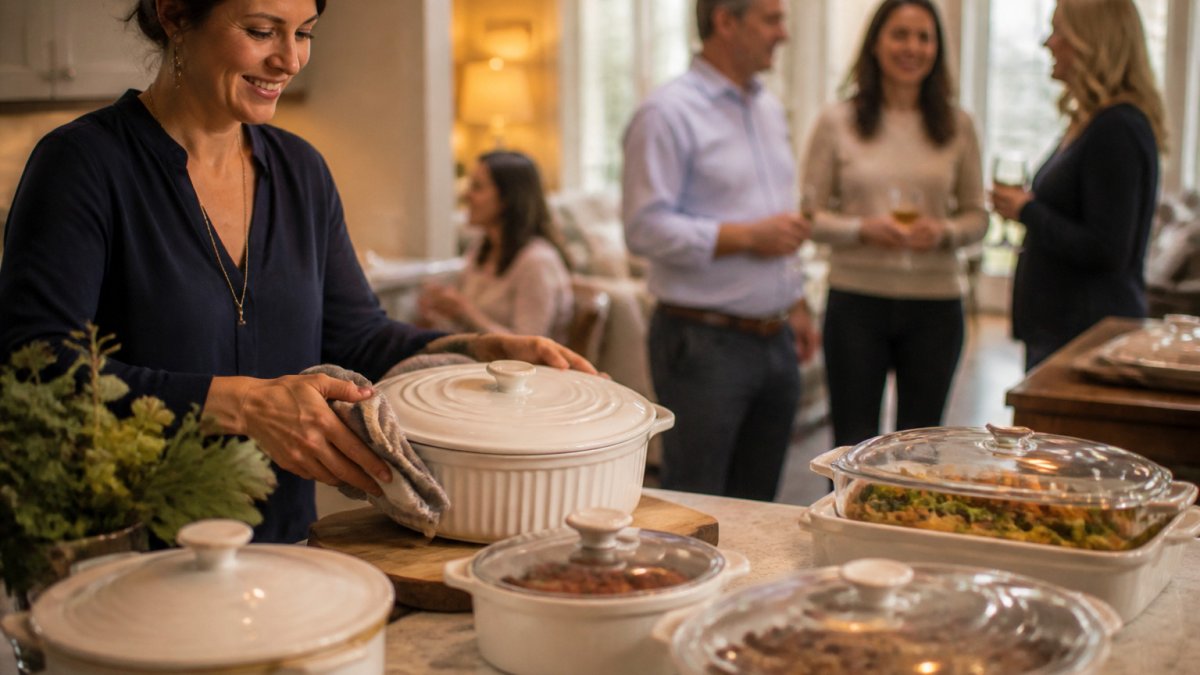
A practical approach is to prepare the main course a day ahead, refrigerate it, and reheat it gently while the starter is served.
A Make-Ahead Timeline That Actually Works
- Two days ahead: Make the braise or stew, cool it uncovered for 30 minutes, then cover and refrigerate. Roast any vegetables for the starter. Make salad dressings and sauces.
- One day ahead: Make the dessert (pot de crème, panna cotta, or a tart shell). Set the table. Chill drinks. Wash and dry salad greens and store them in a towel-lined container.
- Morning of the party: Assemble the starter components, blanch any green vegetables, and set out serving dishes with a sticky note on each one naming the dish.
Reheating and Holding Without Losing Quality
Reheat braises gently, a bare simmer, not a boil, because high heat tightens meat and breaks sauces. If the sauce looks thin, simmer it uncovered for a few minutes; if it looks thick, whisk in stock a tablespoon at a time. Hold polenta or mashed potatoes over low heat with a lid and a splash of stock, stirring every 10 minutes.
Gourmet Techniques Worth Learning for Make-Ahead Cooking
Three techniques do most of the work in a make-ahead gourmet menu. Braising, searing meat, then cooking it low and slow in liquid, improves overnight because the flavors meld. Emulsified sauces such as a vinaigrette or a beurre blanc hold better when made ahead and rewarmed gently than a sauce built at the last minute. Blanching and shocking green vegetables (boiling briefly, then plunging into ice water) lets you cook them hours ahead and finish them in a hot pan at serving time. None of these requires special equipment beyond a heavy pot, a whisk, and a bowl of ice water.
The timeline below lays out when each task should happen so the evening itself stays calm.
TO SEE OUR DAILY MENU CLICK HERE!(CONCORD COMMONS LOCATION ONLY) →
| When | Task | Note |
|---|---|---|
| Two days ahead | Make the braise, roast starter vegetables, make dressings | Cool uncovered 30 minutes, then refrigerate |
| One day ahead | Make dessert, set the table, chill drinks | Pot de crème needs at least 4 hours to set |
| Morning of the party | Assemble starter components, blanch green vegetables | Label each serving dish |
| One hour before guests arrive | Reheat the main, warm bread, put out starter | Reheat gently over low heat |
| Last 20 minutes | Finish starch, toss salad, plate main | Only live finishing happens here |
Sourcing Quality Ingredients and Planning Your Budget Per Guest
Ingredient quality shows up in the final plate. Buy seasonal produce when it peaks, choose fresh cheese and bread from a trusted source, and avoid substitutions that change the dish's character. Check today's daily menu for prepared offerings and approximate pricing before you buy.
Budgeting is simpler when you calculate cost per guest. Divide your total ingredient spend by the number of guests and compare it to what you would pay for a similar meal out.
Wine and Beverage Pairings That Complement Each Course
Match the wine to the dominant flavor of each course. A light white or sparkling wine suits a fresh starter, a medium-bodied red works with a braised main, and a dessert wine or a coffee service can finish the evening.
Serve wine at the right temperature and pour small amounts between courses so the pairings stay balanced rather than overwhelming the palate.
Dinner Party Planning Checklist: Timing From Invitation to Dessert
Use this timeline to keep your gourmet dinner party on track:
- Three to four weeks out: Set the theme, pick the date and send invitations.
- One to two weeks out: Finalize the menu, confirm dietary needs and make a shopping list.
- Two to three days out: Buy non-perishable items and any wine.
Build in a buffer. Something will run late, so a dish that can wait 15 minutes is worth planning for.
When to Hand Off the Cooking: Dinner Party Catering Options
Sometimes the best gourmet dinner party is the one you don't cook. Browse the catering menu to see what is available for your gathering.
Plan Your Next Gourmet Evening With Ready-to-Heat Help
Hosting well comes down to a few clear decisions: a theme, a balanced menu, make-ahead dishes and quality ingredients. Whether you're cooking the whole meal or just the main course, a little planning goes a long way toward an evening your guests will remember.
Frequently Asked Questions
How do you plan a gourmet dinner party?
Start with a theme, a guest count and a date about three to four weeks out. Then draft a three-course menu, check dietary needs with guests before shopping, and build a timeline that works backward from the time guests arrive. Choose two or three dishes you can prepare fully in advance, plan one dish that needs last-minute attention, and keep the rest simple. Writing the plan down as a checklist makes the week before the party far less stressful and keeps the evening focused on your guests.
What should you serve at a gourmet dinner party?
A balanced gourmet menu usually includes a light starter, a main course with a protein and two sides, and a dessert that is not too heavy after a rich main. Mix textures and flavors, such as a crisp salad with a creamy risotto or roasted salmon with crispy potatoes. Gourmet menu ideas work best when at least one dish is a show-stopper and the rest are reliable recipes you have already made successfully.
How many courses should a dinner party have?
Three courses is the most common format for a gourmet dinner party: a starter, a main and a dessert. Four courses works for longer, more formal evenings if you add a salad or palate cleanser. More than four courses can leave you stuck in the kitchen and guests feeling overly full, so keep the number manageable for the time you have and the number of guests you are hosting.
What can you make ahead for a dinner party?
Many dinner party dishes can be prepared a day or two early. Good make-ahead candidates include braises, stews, risotto bases, layered desserts, custards, and marinated proteins. Cold pasta salads and vinaigrettes also keep well. Store components separately when possible and reheat or finish dishes just before serving so textures stay fresh and food safety guidelines for holding temperatures are followed.
How much food should you serve per person at a dinner party?
For a multi-course gourmet dinner, plan smaller portions of each course rather than one large plate. A typical guideline is about 4 to 6 ounces of cooked protein per guest for a main course, with generous sides and a modest starter and dessert. Adjust upward if guests have big appetites or if the party runs long, and always have a little extra bread or a simple side in reserve.
How do you host a dinner party without being stuck in the kitchen?
Choose a menu where most work is done before guests arrive and the final steps take ten minutes or less. Set out appetizers that need no cooking, such as cheese, cured meats and bread, so guests can nibble while you finish the main. Ask a guest to help with drinks or plating, and set a clear timeline so you know exactly when each dish goes into the oven or onto the stove.
How do you set a table for a formal dinner party?
Set a dinner plate in the center of each place setting, with forks on the left and knives and spoons on the right, blade facing the plate. Place the dessert spoon or fork above the plate, and the water and wine glasses to the upper right. Use cloth napkins, keep centerpieces low so guests can see across the table, and add a simple place card for seating if the group is large.
What is the best way to accommodate guests' dietary restrictions?
Ask about allergies and dietary preferences when you send invitations, not the week of the party. Build your menu so that at least one main and one starter are naturally gluten-free or vegetarian, and label dishes clearly on the table so guests can make safe choices. Keep allergens separate during prep, use dedicated utensils, and avoid cross-contact with shared ingredients such as nuts or wheat-based crumbs.