 Ultimate guide
How to Plan Catering for Small Events Step by Step
Last Updated: November 17, 2026
Quick Summary
Learning how to plan catering for small events starts with three basics: the event's purpose, the date and time window, and the confirmed headcount. Settle those first, then choose a menu, service style, and budget that fit them. Order against confirmed guests rather than invitations sent.
- Write one sentence describing the event's purpose before choosing any food.
- Order for confirmed guests, then add a buffer of one or two people.
- Plan about six to eight ounces of cooked protein per adult for a full meal.
- Ask about dietary needs and allergies when sending invitations, not the week before.
- Build a contingency of roughly 10 percent of the total catering budget.
Table of Contents
- Confirming the Headcount Before You Order
- Small Event Catering Menu Ideas That Suit Your Guests
- How Much Food to Order for a Small Event
- Setting a Realistic Small Event Catering Budget
- Choosing a Service Style and Handling Venue Logistics
- Catering Checklist for a Small Event, Week by Week
- Book Your Small Event Menu With Leo's Gourmet Market
- Frequently Asked Questions
Learning how to plan catering for small events is easier than most hosts expect, but only if you settle the basics first. Leo's Gourmet Market prepares food for everything from weeknight family dinners to intimate gatherings, and many planning mistakes happen before anyone picks a single dish.
Start by writing one sentence describing the event's purpose. Our keep-warm guide explains how to hold food at serving temperature once it reaches the venue.
Confirming the Headcount Before You Order
Guest count drives almost every catering decision, and it's where small events most often go wrong. Hosts often order for the number of invitations sent rather than the number of people who have confirmed. Build your count in three columns: invited, likely to attend, and confirmed. Plan around the confirmed number, then add a buffer of one or two people for unexpected guests or a helper who stays to eat.
When you learn how to plan catering for small events, ask for RSVPs with a firm deadline set at least five to seven days before the event, which gives you time to adjust your order without paying rush charges. Include children in the count and note their ages, since a child typically eats less than an adult but still needs something on the plate. Mark any guests who are staying the whole evening versus stopping by briefly.
Small Event Catering Menu Ideas That Suit Your Guests
The right menu for a small event balances what the occasion calls for with what your guests will actually eat.
Consider the cuisine preferences in your group and the setting. A relaxed backyard gathering suits sandwiches, salads, and cold sides, while a cooler evening dinner benefits from warm, comforting entrées. Our fresh mozzarella delivery planning guide covers getting that cheese to your venue in good condition.
Gathering Dietary Restrictions and Allergies
Ask about dietary restrictions when you send invitations, not the week before the event. A short question such as "Do you have any food allergies or dietary needs we should plan for?" gets better answers than a vague request for dietary information.
Once you have the list, plan at least one dish that every guest can eat, rather than forcing one person to eat a separate plate off to the side.
How Much Food to Order for a Small Event
Quantity is where many hosts either run short or pay for food that ends up in the trash. A practical starting point for a light appetizer-style event is about four to six bites per guest per hour. For a full meal with a main course, plan roughly six to eight ounces of cooked protein per adult and about one cup of each side dish per person.
Use a simple worksheet: multiply your confirmed headcount by the portion per person for each dish, then add a 10 percent margin. Children generally eat about half to two-thirds of an adult portion. Leftovers are not a failure. Plan for them, and make sure you have clean containers and a plan for refrigeration within two hours of serving so food stays out of the temperature danger zone of 40 to 140 degrees Fahrenheit.
Setting a Realistic Small Event Catering Budget
A small-event catering budget is not one number, it is a stack of cost components that behave differently.
Start with the food cost per person. Plated or staffed service typically pushes the per-person figure up because labor is built into the price. Rather than anchoring to a percentage split, list each component separately:
- Food and beverage: the menu items themselves, priced per person or per tray.
- Delivery: often a flat fee plus a per-mile charge beyond a set radius, and sometimes a minimum order threshold before delivery is offered at all.
- Staffing: servers, bartenders, and on-site chefs are usually billed hourly with a posted minimum number of hours, so a two-hour event may still carry a four-hour labor minimum.
- Rentals: chafing dishes, linens, plates, glassware, and serving utensils, plus a separate charge if the caterer handles pickup and washing.
Ask every provider for an itemized quote that separates these lines.
Watch out: minimum order and minimum labor thresholds are the most common budget surprises for small events.
Build a contingency line of roughly 10 percent of the total. Small events generate small overages, an extra tray, an added hour of staffing, a rental that arrives short, and a contingency keeps those from blowing the budget. Pricing for Leo's Gourmet Market depends on quantity, dates, delivery, and service style, so contact us for a current itemized quote.
The budget breaks into components that each carry their own cost and risk, so compare them line by line.
| Cost component | What it covers | Watch for |
|---|---|---|
| Food and beverage | Menu items, priced per person or per tray | Largest line; protect it |
| Delivery | Flat fee plus per-mile charge beyond a set radius | Minimum order before delivery |
| Staffing | Servers, bartenders, on-site chefs | Posted minimum hours |
| Rentals | Chafing dishes, linens, plates, glassware | Extra charge for pickup and washing |
| Setup and cleanup | Labor to set up and clear | May be bundled into staffing |
| Gratuity and service charge | Percentage added to subtotal | Not always the same as a tip |
| Taxes | Applied to food, labor, or both | Depends on invoice structure |
| Contingency | Roughly 10 percent of total | Covers small overages |
Choosing a Service Style and Handling Venue Logistics
Service style and venue logistics are linked: the style you pick determines what the venue must provide, and what the venue provides limits the style you can realistically run. Decide them together.
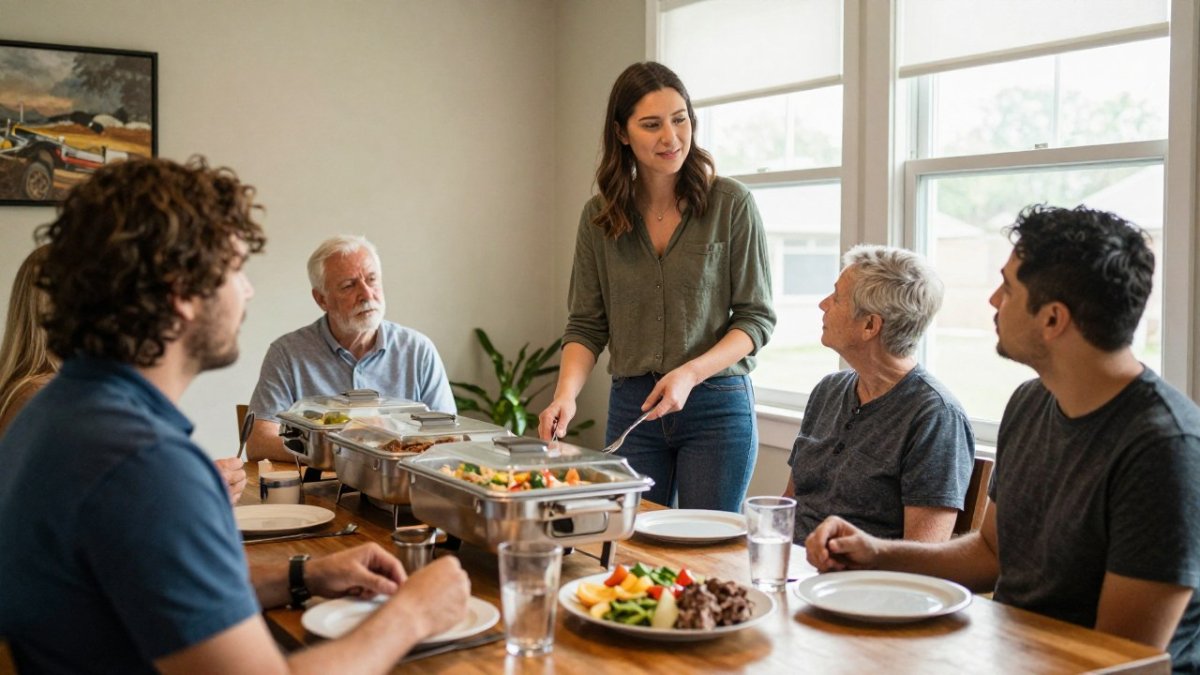
Service styles and what each demands.
- Buffet: guests serve themselves from a line. It keeps staffing low and works well for roughly eight to twenty people, but it needs a clear serving surface, a place to set chafing dishes, and enough room for guests to queue without blocking the room. Food sits out longer, so holding temperature matters.
- Family-style: platters and bowls are placed on the table and guests pass them. It feels generous and communal, needs less serving space than a buffet, but requires enough table area for multiple platters and a plan for refilling them.
- Plated: each guest receives a plated course. It feels formal and controls portions, but it needs servers, a plated-service timeline, and a kitchen or staging area where plates can be finished and held warm.
- Passed appetizers: servers circulate with trays. It suits standing receptions and keeps guests moving, but it requires server labor for the duration and a menu that holds up on a tray.
Venue logistics to confirm before you commit.
- Kitchen access: is there an oven, stovetop, microwave, or at least a prep counter? A venue with no kitchen pushes you toward drop-off food that arrives ready to serve.
- Refrigeration: confirm refrigerator or cooler space and whether it is exclusively yours. Cold items need to stay at 40 degrees Fahrenheit or below until serving.
- Power: chafing dishes that use fuel are self-contained, but warming cabinets, coffee urns, and some rental equipment need outlets. Ask how many circuits are available and whether extension cords are permitted.
- Serving space: measure the table or counter you plan to use. A buffet for fifteen needs more linear space than most hosts expect once chafing dishes, plates, and utensils are laid out.
Match the style to the space and the staffing budget, then confirm each logistics point with the venue in writing. A short email listing delivery time, entrance, contact person, and cleanup expectations prevents most event-day surprises.
Catering Checklist for a Small Event, Week by Week
Use this timeline to keep the planning on track:
- Four to six weeks before: Confirm the date, purpose, and venue. Set a budget and choose a service style.
- Three weeks before: Send invitations with a dietary question and an RSVP deadline. Request catering quotes.
- Two weeks before: Finalize the menu and order. Confirm the headcount range with your caterer.
- One week before: Collect final RSVPs and dietary needs. Confirm delivery time, address, and contact person.
- Two to three days before: Order ice, rent any equipment, and buy disposable items. Confirm the final guest count.
Book Your Small Event Menu With Leo's Gourmet Market
Planning a small event is far less stressful when the food is handled by people who take it seriously. Browse our catering menu to see the options available for your event, and use our planning guide if you want a deeper walkthrough of building the full menu. If you are still gathering dietary needs, our dietary restrictions guide explains how to choose meals that accommodate them.
Frequently Asked Questions
How much food should I order for a small event?
A common starting point is about 6 to 8 ounces of entrée and 3 to 4 ounces of each side per guest for a meal, with more for heavier appetizer spreads. Adjust for hungry crowds, long events, and whether dessert is served. Round up slightly for a small group so you are not short. Leftovers are easy to plan for when you order a little extra protein and sides, . Confirm final quantities with your caterer at least several days before the event.
How far in advance should I book a caterer for a small event?
For a small event, booking two to three weeks ahead is a safe window, and more lead time helps on weekends, holidays, and peak seasons. Last-minute requests are sometimes possible, but menu choices and dates may be limited. Pricing depends on quantity, dates, and delivery, so ask for a current quote early. Leo’s Gourmet Market can discuss timing for your gathering when you contact the shop directly.
What are some simple catering ideas for a small party?
Simple options include a platter of handmade sausage, fresh mozzarella, and artisan bread for a relaxed grazing spread. Pick one or two crowd-pleasers and add a vegetarian or gluten-free option so everyone has something to eat. Keeping the menu focused reduces waste and makes setup easier for a small group.
How do I accommodate dietary restrictions when planning event catering?
Ask every guest about allergies and restrictions when you send invitations, and note whether the need is a preference or a medical allergy. Plan at least one clearly labeled gluten-free and one vegetarian option. Tell your caterer about each restriction in writing. Leo’s Gourmet Market can discuss which dishes suit your guests’ needs when you place your order.
How can I feed a group of 50 guests on a budget?
Choose a service style that limits waste, such as a buffet built around two hearty entrées, a couple of sides, and a simple dessert. Prioritize filling, affordable dishes and skip extra add-ons that guests are unlikely to eat. Ordering for an accurate headcount matters more than anything else, because overordering is the main source of wasted money. Ask for a quote that breaks down quantity, dates, and delivery so you can compare options against your budget.
What foods work best for a small catered gathering?
Foods that hold well at room temperature for a short time and reheat cleanly tend to work best, such as baked pastas, roasted meats, grain salads, and bread-based spreads. Avoid dishes that wilt or dry out quickly unless you can serve them immediately. Choose items that can be served without much fuss, since fewer components mean a smoother event for the host. Labeled containers with reheating instructions make it easier to keep food at safe temperatures throughout the event.
How do I keep catered food safe at a small event?
Keep cold food at 40°F or below and hot food at 140°F or above, which is the standard food safety guidance from the U.S. Department of Agriculture. Do not leave perishable food out for more than two hours, or one hour if the room is above 90°F. Use chafing dishes, ice trays, or warming trays to maintain temperature, and refrigerate leftovers promptly. Label allergens clearly so guests can make safe choices.