 How-to
How Do You Keep Catering Warm for a Party?
Last Updated: November 5, 2026
Quick Summary
To keep catering warm for a party, use covered chafing dishes, insulated carriers or a low oven set to 170 to 200 degrees Fahrenheit, and keep moist dishes covered while crisp foods stay uncovered. Hold hot food at 140 degrees Fahrenheit or above and refill small batches rather than topping off one large tray.
- Use covered chafing dishes or insulated carriers, and keep lids on until guests are ready.
- Set the oven to its lowest reliable hold, usually 170 to 200 degrees Fahrenheit.
- Refill small batches every 30 to 45 minutes instead of topping off one big tray.
- Keep hot food at 140 degrees Fahrenheit or above, and check it with a probe thermometer.
- Count transport and setup time against the two-hour safety window for perishable food.
Table of Contents
- Why Catered Food Goes Cold Faster Than You Expect
- How to Keep Food Warm at a Party Outside
- How to Keep Food Warm Outside Without Electricity
- How to Keep Food Warm in the Oven for a Party
- Choosing a Warming Method by Dish Type
- How Long Can Catered Food Stay Warm Safely?
- Booking Warm, Ready-to-Serve Catering From Leo's
- Frequently Asked Questions
Why Catered Food Goes Cold Faster Than You Expect
Keeping catering warm for a party is harder than most hosts expect, and the exact phrase keep catering warm is where many plans go wrong. Food starts losing heat the moment it leaves the kitchen, and a buffet table adds drafts, open lids and long gaps between refills.
The main reasons are simple. Metal pans conduct heat away quickly. Serving spoons open lids over and over. Guests linger, and trays sit uncovered. Understanding these losses is the first step, because each one has a fix. This guide walks through the methods that work and when to use each one.
How to Keep Food Warm at a Party Outside
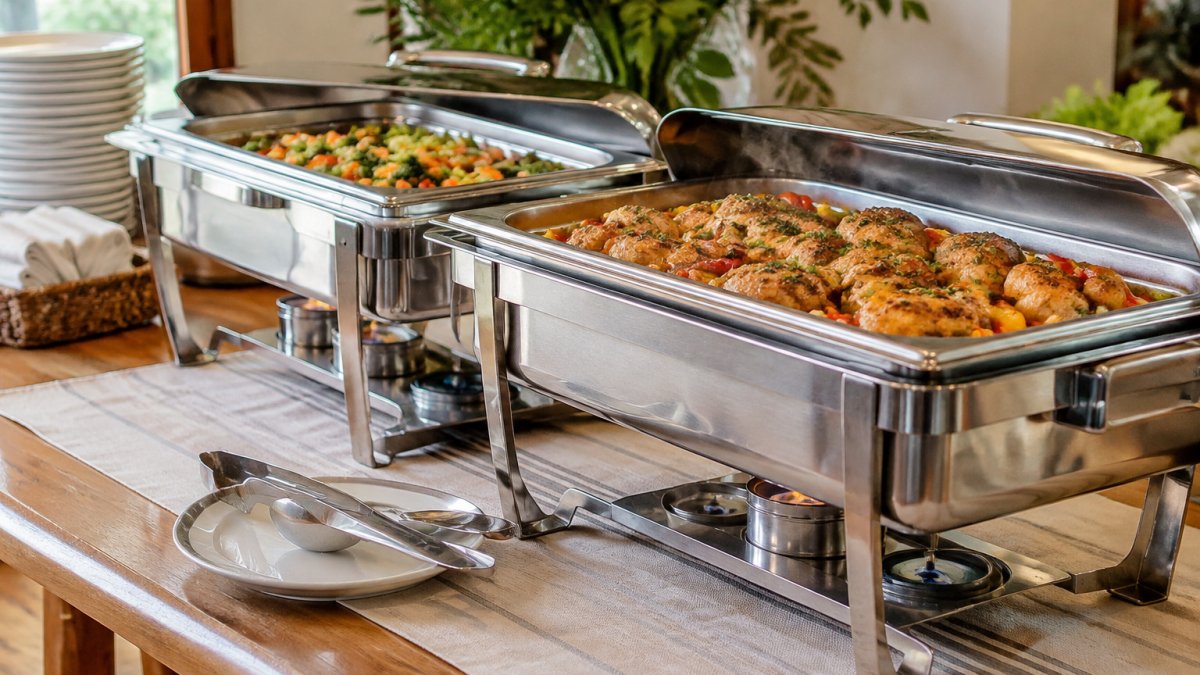
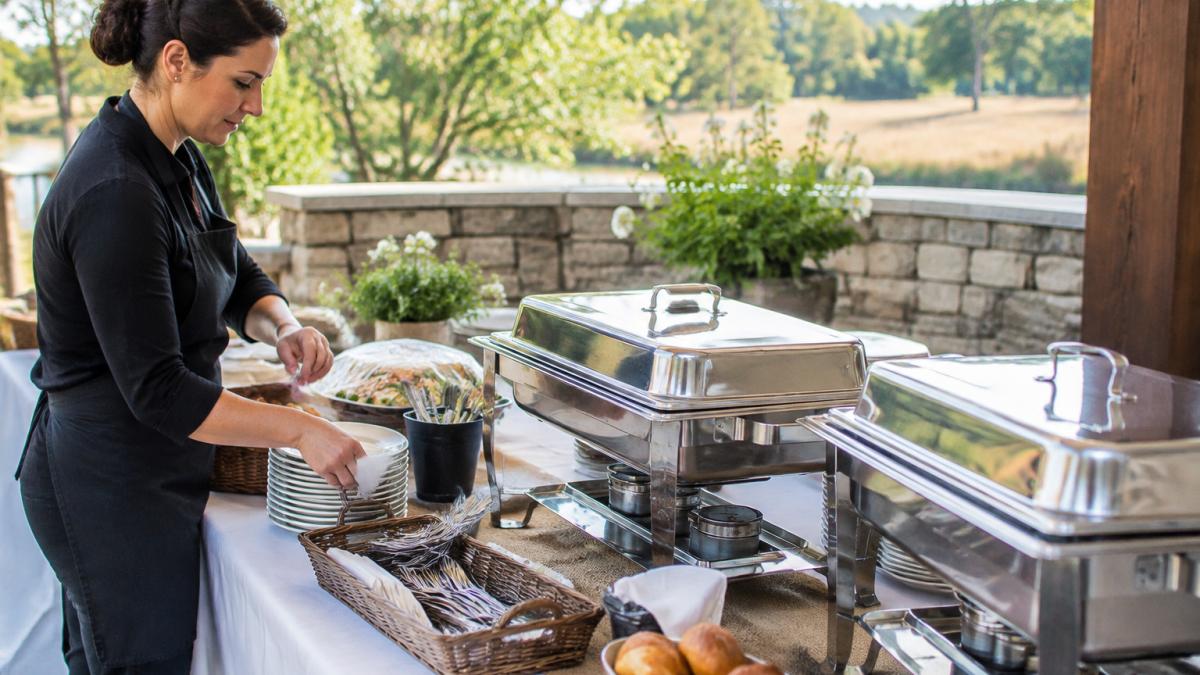
Outdoor parties need extra planning to keep catering warm, because wind and open air pull heat from food fast. Covered chafing dishes or insulated carriers help keep food warm when you're serving outside. Keep lids on until guests are ready to eat, and refill smaller trays instead of topping off one big tray.
Place the buffet in a sheltered spot when you can, away from direct wind. Set serving dishes on a folding table with a tablecloth that hangs low to block drafts.
- Use covered chafing dishes with a steady fuel source
- Keep insulated carriers closed between refills
- Refill small batches every 30 to 45 minutes
- Move the buffet out of wind and direct sun
How to Keep Food Warm Outside Without Electricity
No outlet? You still have good options. Chafing dishes with fuel canisters work without power, and insulated coolers lined with towels can hold food for a while. Wrap hot dishes in foil and then in thick towels before placing them in a closed cooler.
Fuel-based heat needs care. Keep flames steady, never leave them unattended, and check that the fuel is rated for indoor or outdoor use. Set the pan on a stable surface away from tablecloths and decorations.
How to Keep Food Warm in the Oven for a Party
Your oven can be a controllable warmer in a home kitchen, but it is also easy to overcook food in. The goal is not to cook, it is to hold food above the safe holding temperature without pushing it past done. Most ovens cycle on and off, so the displayed temperature is an average, not a constant. That cycling is why a dish on the top rack can scorch while one on the bottom rack stays lukewarm.
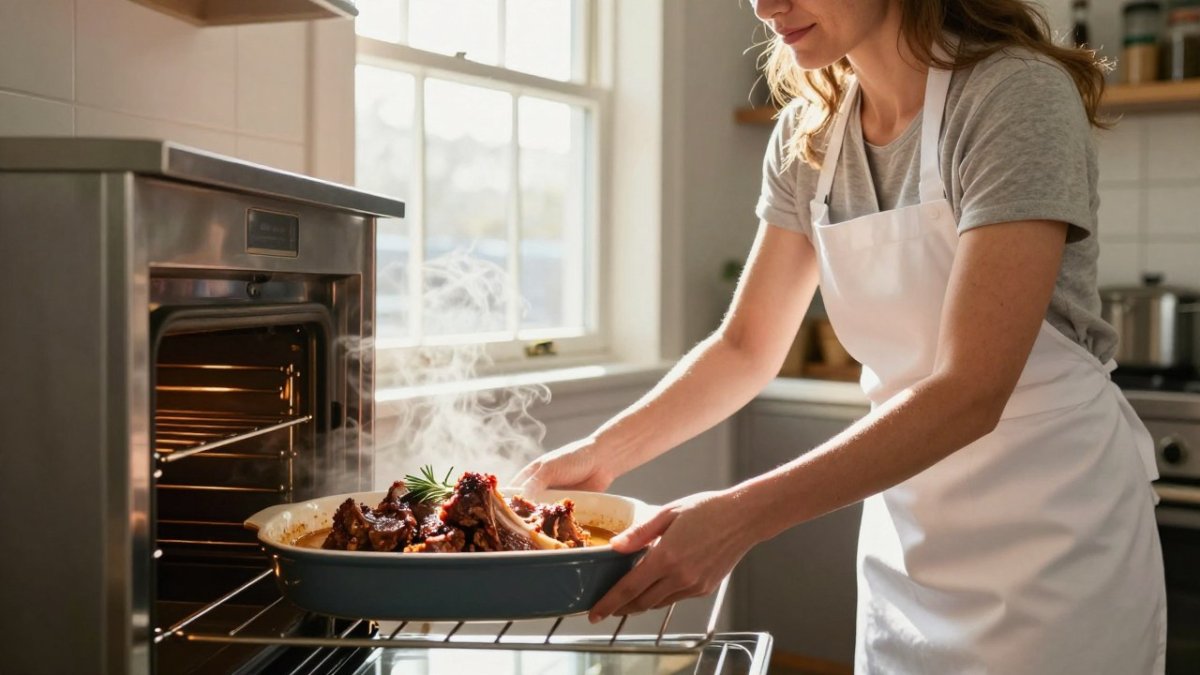
Set the oven to its lowest reliable hold, usually 170 to 200 degrees Fahrenheit. Check the actual temperature with an oven thermometer rather than relying only on the dial. If your oven's lowest setting is 200 degrees, use it and shorten the hold time rather than trying to force a lower number.
Use the middle rack and give each dish room to breathe. Crowding pans blocks airflow and creates cold spots. If you are holding several dishes, rotate them every 20 to 30 minutes so none sits directly over the heating element.
Cover moist dishes, uncover crisp ones. Casseroles, braised meats, stews, and rice hold best covered with foil or a lid, with a splash of broth or water added to replace moisture lost to evaporation. Fried foods, pizza, breaded chicken, and roasted vegetables should stay uncovered on a rack so steam can escape, trapped steam is what turns a crisp crust soggy.
Watch out: foods held at 200 degrees keep cooking. A casserole that was perfectly done at 6 p.m. can be dry and overdone by 8 p.m. If you need a long hold, drop the oven to its lowest setting, keep the dish covered, and check it every 30 minutes.
Know what not to hold in the oven. Anything with a delicate sauce, fresh herbs, or a cream-based topping will break down or discolor. Salads, cut fruit, and cold sides should never go in. And never use the oven to hold food you plan to serve rare or medium-rare, carryover heat will push it past the doneness you intended.
Plan the handoff. If the oven is your only warmer, you cannot also use it to finish cooking. Stagger your cooking so the oven frees up 30 to 45 minutes before guests arrive, then switch it to hold mode.
TO SEE OUR DAILY MENU CLICK HERE!(CONCORD COMMONS LOCATION ONLY) →
Choosing a Warming Method by Dish Type
Not every dish suits every method. Saucy dishes like pasta, stews and braised meats hold heat well in a slow cooker or chafing dish. Crispy items such as fried foods, pizza and roasted vegetables do better on a warming tray or in a low oven, uncovered.
A simple rule helps: moist foods go in covered warmers, and crisp foods stay on open trays. Use your slow cooker for stews and sauces, your oven for casseroles, and a warming tray for bread and sides.
| Dish Type | Best Method | Avoid |
|---|---|---|
| Stews and sauces | Slow cooker or chafing dish | Open tray |
| Casseroles | Oven at 200°F, covered | Direct heat |
| Crispy foods | Warming tray, uncovered | Covered container |
| Bread and rolls | Wrapped in foil in a warmer | Open air |
How Long Can Catered Food Stay Warm Safely?
Food safety is the part of catering that cannot be fixed later. Food safety guidance generally calls for keeping hot food at 140 degrees Fahrenheit or above and checking official USDA guidance for time limits on perishable food. What most guides leave out is that the clock starts when the food leaves the heat, not when guests start eating.
Count transport and setup against the two-hour window. If a dish comes out of the oven at 4 p.m., spends 30 minutes in a carrier, and sits on the buffet for 90 minutes before the last guest serves themselves, you are already at the limit. Build the timeline backward from service: pack last, unpack first, and put the most perishable dishes out closest to when guests arrive.
Monitor with a probe thermometer, not your hand. Check each dish at the center and at the edge, because edges cool faster. Checking temperatures periodically during service and logging the readings is a good practice. If a dish drops below 140 degrees, you have two choices: reheat it to 165 degrees Fahrenheit and return it to the buffet, or discard it. Reheating resets the clock only if the food is brought back above 140 degrees quickly and held there.
Watch out: topping off a warm tray with fresh hot food does not reset the safety clock for the older food underneath. The safest approach is to swap the whole pan, not to layer new food over old.
Keep cold food cold, too. The same two-hour rule applies to potato salad, cut fruit, dips, and anything with dairy. Hold cold dishes at 40 degrees Fahrenheit or below in an ice bath or a cooler, and keep them separate from hot trays so the heat does not migrate.
Plan for the last guest, not the first. The most common failure is a buffet that looks fine at 6 p.m. and is unsafe by 8 p.m. because no one checked. Assign one person to monitor temperatures and replenish trays, and give that person a thermometer and a written time log. If you are catering a larger event, the same workflow scales: pack hot and cold items in separate carriers, set up the buffet in the order guests will serve themselves, hold with covered chafing dishes or warmers, and replenish in small batches rather than one large top-off.
Know the limits of equipment-free holding. A cooler lined with towels, a foil-wrapped dish under blankets, or a covered pot on a trivet can buy 30 to 60 minutes, but none of them holds a safe temperature for hours. Use them for short transport and early setup rather than as a primary warmer for a long party.
Booking Warm, Ready-to-Serve Catering From Leo's
If keeping food warm feels like too much work, Leo's Gourmet Market offers customized catering for small family gatherings to larger events.
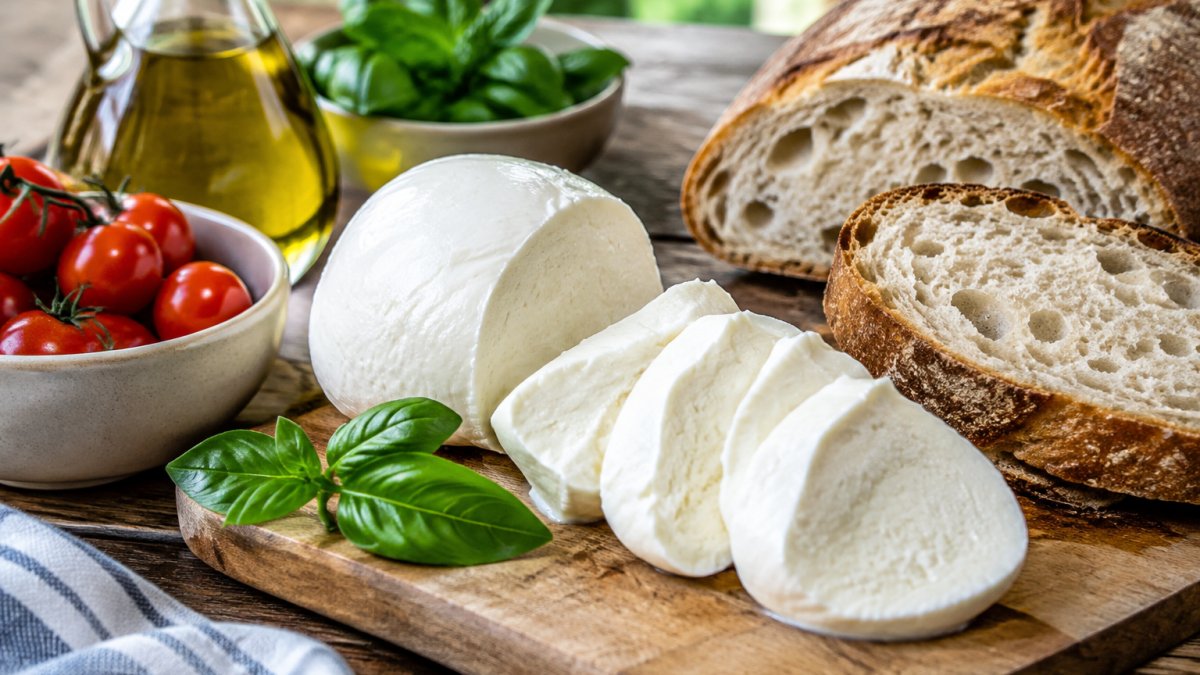
Pricing depends on quantity, date and delivery, so contact us for a current quote. If you're still planning your spread, our event catering menu guide walks through which dishes suit which setups. Planning a mozzarella platter? Fresh mozzarella delivery for local events explains how to keep it cool and fresh until serving.
Frequently Asked Questions
How do caterers keep their food warm?
Professional caterers mostly rely on chafing dishes with a fuel or electric heat source, steam table pans set over a water bath, and insulated carriers for transport. Many also hold proteins in ovens set around 200°F and cover every pan to trap moisture. The key is holding food above 140°F and checking temperatures with a food thermometer every hour, since the goal is to keep food hot enough to be safe and still tasting fresh for the length of the event.
What can I buy to keep food warm for a party?
A basic setup for home parties includes a chafing dish with fuel, an electric warming tray, or a slow cooker set to the warm setting. Insulated food carriers help with transport, and a food thermometer is essential for checking temperatures. Pricing varies by brand and size, so check current retail listings before you buy. For larger events, you can also ask Leo's Gourmet Market about customized catering options.
How long can catered food stay warm?
Food held at 140°F or above is safest when kept hot, and official USDA guidance sets time limits for perishable food left at room temperature. Once the total time at unsafe temperatures reaches those limits, discard the food. Keep a timer running from when food leaves the heat, and refill or replace pans before they drop below safe serving temperature.
Can you keep catered food warm in the oven?
Yes, a standard oven set to about 200°F can hold most dishes for a few hours. Cover pans with foil to prevent drying out, and add a splash of broth to dishes like pasta or rice. Avoid leaving crispy items such as fried foods or pizza uncovered, since they lose texture quickly. Check each dish with a thermometer before serving, and move it to a buffet warmer once guests arrive.