 How-to
6 Fresh Mozzarella and Artisan Bread Pairings Worth Trying
Last Updated: November 12, 2026
Quick Summary
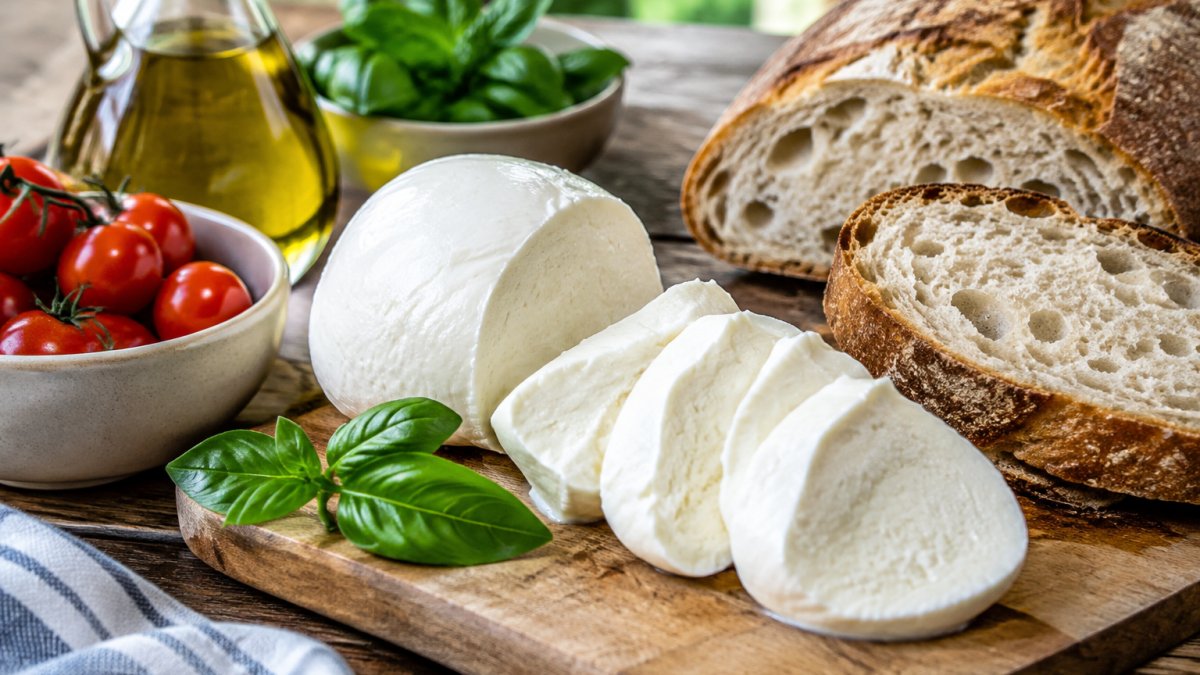
The best artisan bread for fresh mozzarella is a bread with a firm crust, a moderately open crumb and a little tang, such as country sourdough. Its firm crust resists the cheese's moisture, and its tang balances the cheese's milky richness, so the bread supports the mozzarella rather than competing with it.
- Pick a country sourdough when you want one loaf that works for most fresh mozzarella dishes.
- Toast the bread first so its surface dries and resists the cheese's moisture.
- Drain fresh mozzarella well and let it sit 15 to 20 minutes at room temperature before serving.
- Use a baguette for toppings, since its tighter crumb keeps them on top.
- Avoid pairing burrata with soft focaccia, because both are high in moisture and turn heavy quickly.
Table of Contents
- Why Fresh Mozzarella and Artisan Bread Work Together
- Matching Artisan Bread Styles to Fresh Mozzarella
- How Moisture, Acidity and Crumb Structure Shape the Pairing
- What Pairs Well With Fresh Mozzarella Beyond Caprese
- Fresh Mozzarella Appetizer Ideas to Try at Home
- How to Serve Fresh Mozzarella With Bread
- Stocking Your Board for Your Next Gathering at Leo's
- Frequently Asked Questions
Fresh mozzarella and artisan bread are one of the simplest pairings in the kitchen, and one of the easiest to get wrong. A fresh mozzarella artisan bread pairing guide helps you match the right loaf to the right cheese, so the bread supports the mozzarella instead of fighting it.
Fresh mozzarella is a soft, moist cheese with a mild, milky flavor. Because it is so delicate, the bread you serve it with has to add contrast, not compete. The six pairings below cover the styles most worth trying at home, plus the reasons each one works.
Why Fresh Mozzarella and Artisan Bread Work Together
Fresh mozzarella is mostly water and mild flavor, so it needs something with more structure and more taste around it. Bread gives it a surface to hold onto, and its crust and crumb add texture the cheese does not have on its own.
A few practical points make the difference:
- Soft cheese needs a firm base. A sturdy crust keeps the slices from sinking into the bread.
- Mild cheese welcomes bold flavors. Olive oil, salt, herbs and charred edges give the pairing its punch.
- Texture contrast keeps each bite interesting. Chewy crumb against creamy cheese feels more satisfying than two soft foods together.
Artisan bread, made with a longer ferment and a crisp crust, gives you all three.
Matching Artisan Bread Styles to Fresh Mozzarella
Not every artisan loaf works equally well with fresh mozzarella. The right choice depends on three things: how firm the crust is, how open the crumb is, and how much tang the ferment built. For more on choosing bread styles, read how to choose fresh meal delivery for dietary restrictions.
| Bread style | Crust | Crumb | Best serving method | Why it works with fresh mozzarella |
|---|---|---|---|---|
| Sourdough (country loaf) | Thick, blistered, chewy | Open, irregular, moderately moist | Lightly toasted, rubbed with garlic | The tang balances the cheese's milky richness; the firm crust keeps slices from collapsing under the cheese's moisture |
| Baguette | Thin, crisp, shatters | Tight, airy, low moisture | Sliced on the bias and toasted as crostini | The tight crumb holds toppings on top rather than letting them sink; the crisp shell gives a clean snap against soft cheese |
| Ciabatta | Thin, floury, lightly crisp | Very open with large holes | Halved for small sandwiches | The big holes trap olive oil and melted cheese; the chewy interior stands up to tomato and cured meat |
| Focaccia | Soft, oily, dimpled | Dense but light, high oil | Torn into rough pieces, served warm or at room temperature | The bread brings its own olive oil and salt, so a plain mozzarella gets seasoning without extra work |
| Country white or pain de campagne | Medium, lightly crisp | Moderately open, slightly sweet | Thick slices, lightly grilled | The mild sweetness flatters the cheese's milk flavor without competing; sturdy enough for thick mozzarella slices |
| Soft enriched rolls (brioche-style) | Soft, thin, barely crisp | Tight, rich, sweet | Warm, with the cheese melted | The sweetness and butterfat suit warm mozzarella, but the soft crumb needs a firm cheese or a melted preparation to avoid a mushy bite |
Sourdough and Crusty Loaves
Sourdough is a reliable partner for fresh mozzarella. Its tangy flavor cuts through the richness of the cheese. Slice the loaf about half an inch thick, toast the slices lightly, and rub them with a cut garlic clove. Top with mozzarella, a drizzle of olive oil and a pinch of flaky sea salt.
Crusty country loaves and baguettes work in the same way. They give you a crisp exterior and a soft interior, which is exactly the contrast fresh mozzarella needs.
Focaccia, Ciabatta and Soft Breads
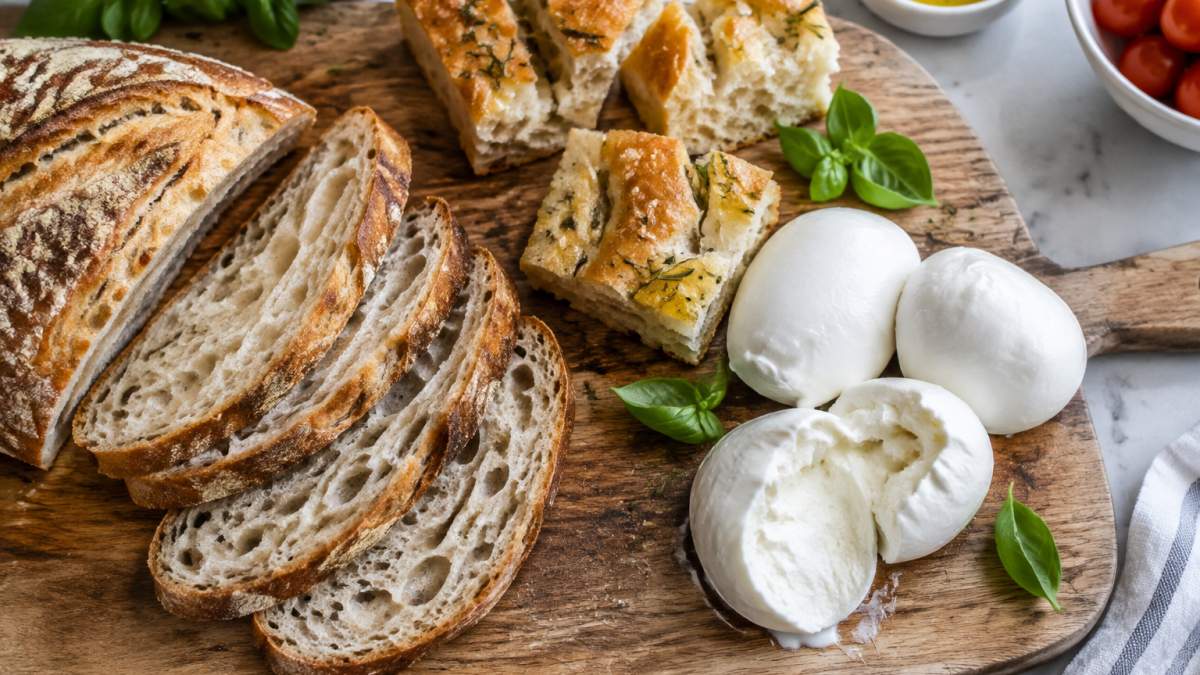
Focaccia brings its own olive oil and herbs, so it pairs well with a plain, mild mozzarella. Tear it into rough pieces rather than slicing it neatly, since the uneven edges catch more oil and salt. You can order fresh artisan loaves online to have them on hand. Ciabatta has large holes and a light, airy crumb.
Watch out: a very soft, sweet roll plus cold, wet mozzarella is the one combination on this list that can turn gummy, if you want the soft bread, melt the cheese or use a firmer low-moisture mozzarella instead.
How to Choose When You Cannot Decide
If you are buying one loaf for a mixed board, pick a country sourdough with a firm crust and a moderately open crumb. It is the most forgiving option: sturdy enough for thick slices, tangy enough to lift the cheese, and neutral enough to carry either Caprese toppings or roasted vegetables. Buy a second, softer bread only if you plan to serve warm, melted preparations alongside the cold ones.
How Moisture, Acidity and Crumb Structure Shape the Pairing
The three factors that matter most are moisture, acidity and crumb structure. Most pairing guides stop at naming them. The useful part is knowing how they interact, because the same mozzarella behaves differently on a dense country loaf than on an airy ciabatta.
Moisture: The Cheese Weeps, the Bread Has to Cope
Fresh mozzarella is high in moisture, and it releases that water as it sits at room temperature. The bread's job is to absorb some of it without turning soggy. A dense, dry crumb absorbs the liquid slowly and stays firm; a very moist, high-hydration crumb is already near saturation, so the cheese's water pushes it over the edge.
Assembly timing matters as much as bread choice. If you must assemble ahead, toast the bread first so the surface dries and forms a barrier, and drain the cheese thoroughly before slicing.
Acidity: The Tang Is a Tool
Sourdough and other long-fermented breads carry a mild tang from lactic and acetic acids. That tang balances the milky richness of the cheese the same way a squeeze of lemon balances a rich sauce. Breads made with commercial yeast and a short ferment have almost no tang, so the cheese tastes flatter on them. If you are serving a very mild, milky mozzarella, a lightly tangy loaf does more for it than any topping.
Crumb Structure: Open Versus Tight
An open crumb traps olive oil and melted cheese in its pockets, which is why ciabatta and country sourdough feel so generous with oil. A tight crumb holds the toppings on top, which suits thick slices and firmer cheese. Neither is better in the abstract, the question is whether you want the bread to catch the oil or to support the topping.
Matching Mozzarella Style to the Bread
The cheese itself changes the equation. Cow's-milk mozzarella is the mildest and wettest of the common styles, so it benefits most from a tangy, firm-crusted loaf. Buffalo mozzarella is richer and tangier, with a softer, more yielding texture; it stands up to a softer bread like focaccia because the cheese brings its own flavor.
Watch out: burrata on soft, fresh focaccia is a popular combination that often fails in practice, because both the bread and the cheese are high in moisture and the result turns heavy within minutes.
A Quick Decision Rule
When you are unsure, pick a bread with a firm crust, a moderately open crumb and a little tang, and drain the cheese well before serving. That combination works with nearly any fresh mozzarella, and it leaves room for whatever toppings you add.
What Pairs Well With Fresh Mozzarella Beyond Caprese
Caprese, with tomato, basil and olive oil, is the classic pairing, but it is not the only option. These ingredients work just as well:
- Roasted peppers: Sweet, smoky strips add color and a slight char.
- Grilled vegetables: Zucchini, eggplant and onions bring a savory depth.
- Mushrooms: Sautéed mushrooms with garlic add an earthy note.
- Pesto: A spoonful of basil pesto replaces both the tomato and the basil.
- Balsamic vinegar: A few drops add sweetness and acidity.
- Cured meats: Thin prosciutto or salami make the spread more substantial.
Choose one or two of these per platter. Too many toppings will overwhelm the mild cheese and bury the bread.
Fresh Mozzarella Appetizer Ideas to Try at Home
These simple appetizers come together in about 15 minutes:
- Grilled bread with mozzarella and tomato: Grill sourdough slices, rub with garlic, then top with sliced mozzarella and tomato.
- Warm mozzarella and roasted pepper crostini: Toast baguette rounds, add cheese and roasted pepper, and broil until the cheese softens.
- Focaccia squares with mozzarella and pesto: Cut focaccia into squares, spread with pesto, and add torn mozzarella.
- Mozzarella and grilled vegetable bites: Layer grilled zucchini and eggplant between two slices of ciabatta with a slice of cheese.
How to Serve Fresh Mozzarella With Bread
Follow these steps for a simple, reliable platter:
- Take the mozzarella out 15 to 20 minutes early. Cold cheese tastes flat. Room-temperature cheese tastes milky and soft.
- Drain the cheese well. Pat the balls dry or let them rest on a towel. Excess water makes the bread soggy.
- Slice or tear the cheese just before serving. Cut balls into half-inch slices, or tear them by hand for a rustic look.
- Warm the bread. A few minutes in a hot oven or on a grill brings out the crust and aroma.
- Dress the cheese lightly. Use extra-virgin olive oil, flaky sea salt and fresh herbs. Add any balsamic at the last minute.
- Assemble and serve at once. Place the cheese on the bread just before guests arrive.
Stocking Your Board for Your Next Gathering at Leo's
A good board balances textures and flavors, so plan for variety rather than volume.
If you would rather not build the board yourself, Leo's Gourmet Market offers customized catering for gatherings of any size. Pricing depends on quantity, date and delivery, so contact the market for a current quote.
Start with one pairing from this guide this week. Once you find the bread and cheese combination you like best, repeating it will be easy.
Frequently Asked Questions
What pairs well with fresh mozzarella?
Fresh mozzarella is mild and creamy, so it works best with ingredients that add contrast rather than competing flavors. Ripe tomatoes, fresh basil, and a drizzle of extra-virgin olive oil are classic partners. Roasted peppers, grilled vegetables, and a light sprinkle of flaky sea salt also complement it well. Balsamic vinegar adds sweetness and acidity. Pairing one or two of these with a good bread keeps the cheese as the star of the plate.
Which artisan bread goes best with fresh mozzarella?
Crusty sourdough and ciabatta are among the most reliable choices because their chewy, open crumb holds the soft cheese without going soggy. Focaccia adds olive oil and herbs that echo the flavors of a Caprese plate. Softer breads work when you want a gentler bite, but they need a sturdier topping to avoid turning mushy. Toasting or grilling slices adds a crisp crust that contrasts nicely with the creamy mozzarella.
Should fresh mozzarella be served at room temperature?
Yes. Take fresh mozzarella out of the refrigerator about 30 minutes before serving so it softens and its flavor opens up. Cold mozzarella tastes firmer and less milky. Drain it well before slicing or tearing, and keep it covered until serving so it does not dry out. Eat it within a day or two of opening for the best texture.
How do you keep artisan bread crisp when serving it with mozzarella?
Toast or grill the bread just before serving and keep it separate from wet toppings until the last moment. Tomatoes and mozzarella release moisture that softens crusts quickly. Serving the bread in a basket lined with a cloth helps it stay warm and crisp. If you need to prepare ahead, toast the slices and store them loosely covered at room temperature, then re-crisp them in a hot oven for a few minutes.