 How-to
How to Store Chef Prepared Meals for Peak Freshness
Last Updated: November 15, 2026
Quick Summary
Store chef prepared meals by cooling them uncovered at room temperature for up to two hours, then sealing and refrigerating them at 40°F or below. Most cooked meals stay fresh for three to four days in the fridge, while seafood and fresh salads last just one to two days.
- Never seal a hot meal and put it straight into the fridge; let it stop steaming first.
- Label each container with the dish name and the date you stored it.
- Freeze cooked meals flat with a half inch of headspace for two to three months at 0°F.
- Store raw proteins on the bottom shelf to prevent cross-contamination.
- Reheat gently at 325°F to 350°F in the oven and only reheat what you will eat.
Table of Contents
- How to Store Chef Prepared Meals in the Fridge
- How Long Does Meal Prep Last in the Fridge?
- How to Store Chef Prepared Meals in the Freezer
- Choosing the Right Meal Prep Containers
- Storage Needs by Dish and Ingredient
- Food Safety, Allergies, and Cross-Contamination
- Reheating Stored Meals Without Drying Them Out
- Picking Up Your Next Round of Chef Prepared Meals
- Frequently Asked Questions
How to Store Chef Prepared Meals in the Fridge
Learning how to store chef prepared meals starts with one rule: get them cold fast, then keep them cold. At Leo’s Gourmet Market, our entrées come in oven-safe containers with clear heating instructions. The key is timing, not guesswork.
Cooling and storing correctly is what keeps a chef-crafted dinner tasting like dinner, not leftovers.
Cooling Food Safely Before It Goes In
Never seal a hot meal and slide it straight into the fridge. Trapped steam turns sauces watery and gives bacteria a warm place to grow.
Follow this order:
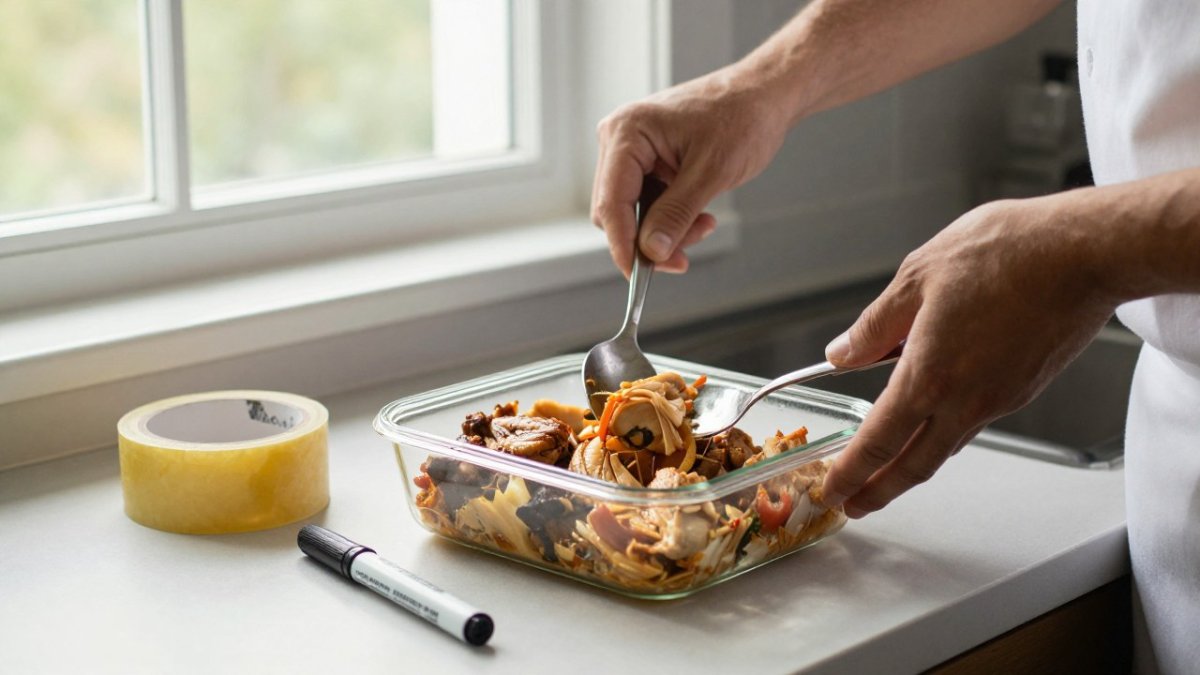
- Leave the lid off and let the meal sit at room temperature for up to two hours.
- Split large portions into smaller containers so they cool faster.
- Move the containers to the fridge once they stop steaming.
- Seal them only after they are cool.
Watch out: leaving food out longer than two hours is one of the most common storage mistakes, and it is the one that matters most.
Portioning and Labeling for the Week
Portion meals into the sizes you will actually eat. A family-sized tray reheated twice tastes worse each time.
- Split entrées into individual portions before storing.
- Label each container with the dish name and the date you stored it.
- Keep the label on the lid where you can see it at a glance.
How Long Does Meal Prep Last in the Fridge?
Most cooked meals stay fresh for three to four days in a refrigerator held at 40°F or below, according to FDA refrigerator storage guidance. That headline number is only useful if you know where your fridge actually sits and which dishes fall outside the window. Put an appliance thermometer on the middle shelf and check it weekly; most home refrigerators run between 37°F and 40°F when set correctly, and a setting of 40°F or lower is the target.
Use this reference, which separates dishes by how fast they decline rather than lumping everything together:
| Meal Type | Fridge Life at 40°F or Below | Best Container |
|---|---|---|
| Braises, stews, roasted meats | 3-4 days | Glass with airtight lid |
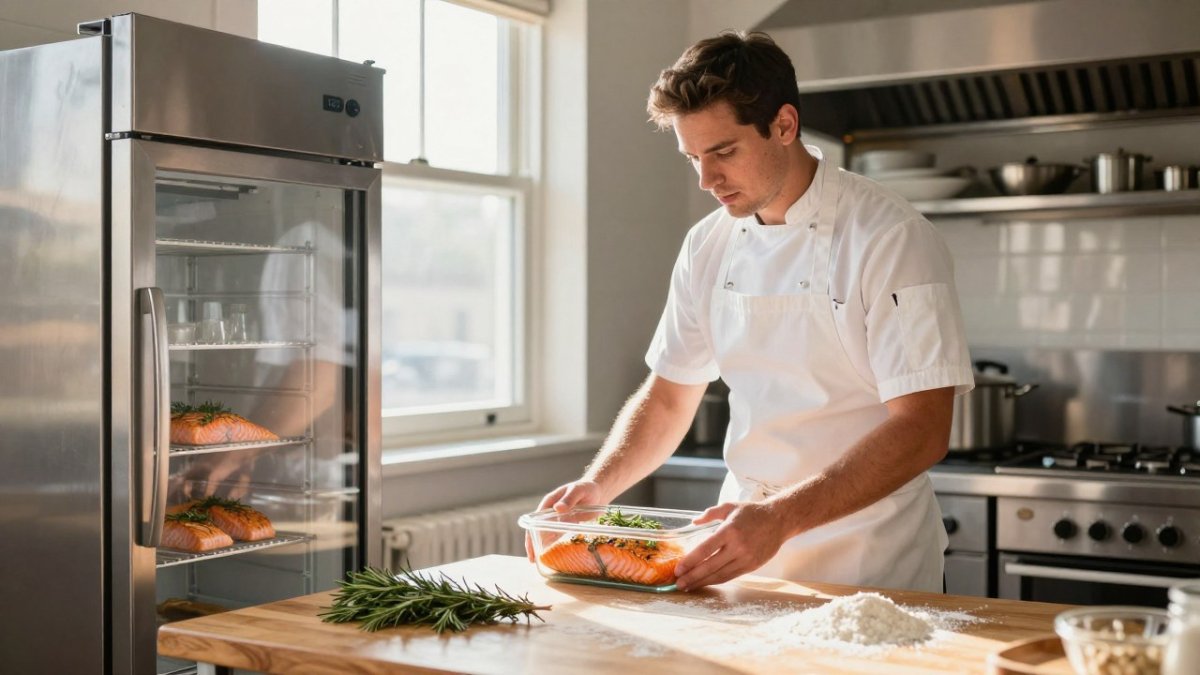
| Seafood dishes | 1-2 days | Shallow glass container |
| Pasta and grain dishes | 3-4 days | Glass or rigid plastic |
| Creamy sauces | 2-3 days | Small airtight container |
| Fresh salads and cut produce | 1-2 days | Vented container |
| Cooked rice and grains | 3-4 days | Shallow airtight container |
| Soups and stocks | 3-4 days | Glass jar with tight lid |
Fridge Life at 40°F or Below
A few mechanics explain the spread. Seafood and creamy sauces have more free water and less acid or salt, so spoilage organisms multiply faster. Braises and stews are typically cooked longer, which lowers moisture at the surface and raises salt content, buying a day.
Delivery-day timing. Chef-prepared meals that arrive chilled should go into the refrigerator immediately, not onto the counter. Follow any package-specific instructions over general guidance.
Component-level storage. Mixed dishes last longest when the components are stored separately.
Signs to discard. Do not rely on smell alone. Discard a meal if the container is swollen, the lid is domed, the surface is slimy, or the color has shifted in a way that does not match the dish.
How to Store Chef Prepared Meals in the Freezer
Freezing is how you stretch chef prepared meals past the workweek. The trick is to freeze fast, freeze flat, and remove as much air as possible.
Here is the process we recommend:
- Cool the meal completely in the fridge first.
- Portion into freezer-safe containers, leaving a half inch of headspace for expansion.
- Press plastic wrap against the surface of sauces to block ice crystals.
- Label with the dish name and freeze date.
- Freeze containers flat so they stack and thaw evenly.
Most cooked meals hold well for two to three months in a freezer kept at 0°F, per USDA freezing and food safety guidance. Quality fades after that, even when the food is still safe.
Which Dishes Freeze Well and Which Don't
Not every dish survives the freezer. This is where most guides wave their hands, so here is the honest breakdown.
Freezes well:
- Braised meats, stews, and chili
- Soups and stocks
- Baked pasta dishes
- Meatballs and sausage
- Rice and grain bowls
Skip the freezer:
- Fresh salads and cut vegetables
- Cream-based sauces, which can separate
- Fried foods, which turn soggy
- Delicate fish
- Custards and soft cheeses
A common mistake is freezing a dish that was already frozen and thawed once. Reheat it and eat it instead.
Choosing the Right Meal Prep Containers
The best meal prep containers are airtight, freezer-safe, and sized to a single serving. Everything else is preference.
Glass versus plastic containers: Glass does not stain, holds heat well, and never picks up the smell of last week's curry. It is heavier and costs more. Plastic is lighter and cheaper, but it can warp and hold onto odors over time.
Silicone containers flex for tight freezer space and work well for soups, though they are harder to stack.
Zip-top bags are the space-saver for freezing flat. They are not ideal for saucy dishes you plan to reheat in the container.
Look for these features:
- A tight-sealing lid, not just a resting cover
- A freezer-safe label on the base
- Straight sides for even reheating
- Sizes that match your portion sizes
Avoid thin takeout containers for long-term storage. They crack in the freezer and leak in the fridge.
Storage Needs by Dish and Ingredient
Different components need different treatment because they fail in different ways. Store them separately and combine at reheat time, and you preserve texture that a single combined container would destroy.
- Proteins: keep in their own container so juices do not sog up grains. Roasted and braised meats reabsorb their own juices as they cool, so a shallow container with a tight lid keeps them moist without drowning the starch next to them. Slice large cuts before storing so they reheat evenly.
- Sauces and gravies: store in small jars with tight lids. Sauce that sits against a grain for days turns the grain mushy and can make the sauce taste stale. Keep sauces separate and add them after reheating.
- Fresh produce and garnishes: keep dry and separate until serving. Wash and dry produce thoroughly before storing; surface water is what turns cut vegetables limp. Use a vented container or a paper towel under the lid to manage condensation.
- Breads and rolls: wrap tightly and store at room temperature, not the fridge. The refrigerator accelerates staling by driving moisture out of the crumb; a bread box or a sealed bag on the counter holds quality for a day or two.
- Handmade sausage: refrigerate and use within a few days, or freeze for longer keeping. Fresh sausage has a shorter window than cooked meat because it is raw; keep it on the bottom shelf and cook it through before storing any leftovers.
- Cooked rice and grains: cool fast and store in a shallow container. Packed rice holds heat in the center, which is exactly the condition spoilage organisms need. Spread it thin, let it stop steaming, then seal.
- Fried foods: store uncovered in the refrigerator for the first hour to let steam escape, then cover. A tight lid on hot fried food traps moisture and guarantees sogginess on reheat.
Allergen and cross-contamination separation. If you are storing meals for a household with allergies, keep allergen-containing dishes in sealed containers on a separate shelf from allergen-free meals, and label the lids clearly.
Packaging trade-offs. Chef-prepared meals often arrive in containers designed for the oven or microwave. Keeping the meal in its original packaging is the safest choice when the package is intact and the provider's instructions say it is oven-safe or microwave-safe.
For a deeper look at handling fresh sausage, our guide on how to store fresh handmade sausage walks through the details.
Food Safety, Allergies, and Cross-Contamination
Cross-contamination is the quiet risk in every fridge. One leaky container of raw protein above a ready-to-eat meal can undo a week of careful prep.
Keep these habits:
- Store raw proteins on the bottom shelf, always.
- Use separate cutting boards for raw meat and ready-to-eat food.
- Wash hands and surfaces between tasks.
- Never reuse a container that held raw meat without a full wash.
- Keep allergy-triggering ingredients in labeled, sealed containers.
If you are managing dietary restrictions, our guide on choosing fresh meal delivery for dietary restrictions covers what to ask before you order. The CDC food safety guidance is a solid reference for home kitchen practices.
Reheating Stored Meals Without Drying Them Out
Dry, rubbery leftovers usually come from too much heat for too long. Reheat gently and add moisture back.
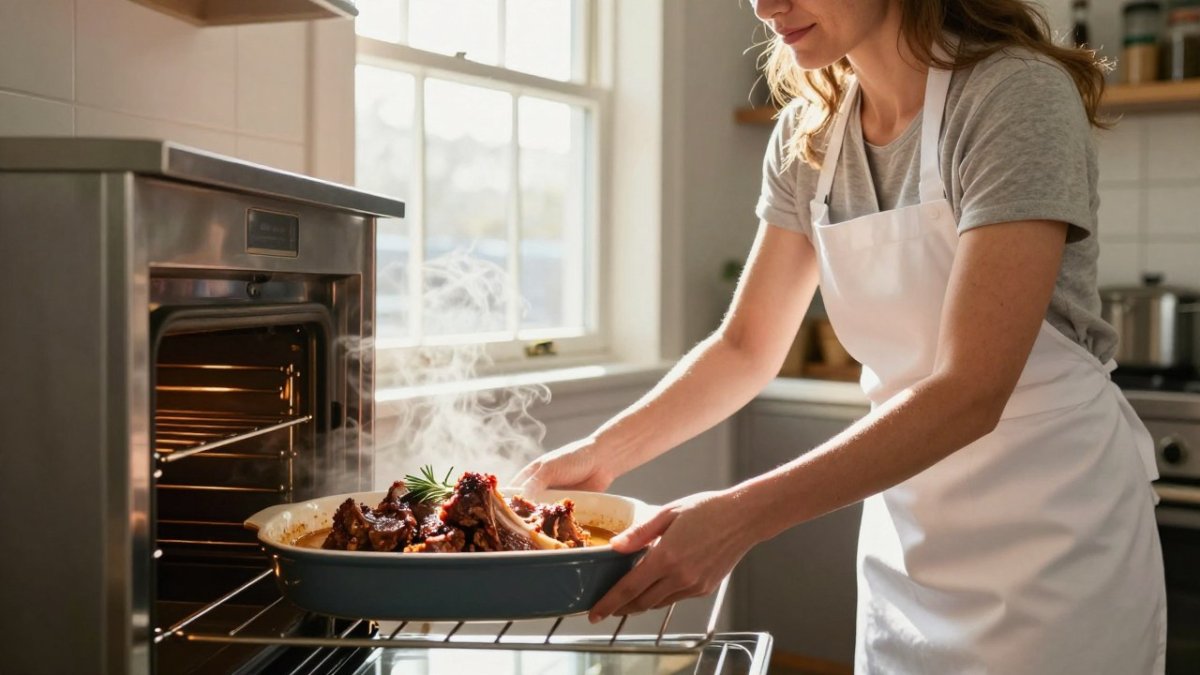
- Oven: reheat covered at 325°F to 350°F until the center is hot.
- Microwave: use medium power in short bursts, stirring between.
- Stovetop: warm sauces and stews low and slow with a splash of water or stock.
- Add moisture: a spoonful of sauce, broth, or a pat of butter revives most dishes.
Reheat only what you plan to eat. Every reheat cycle costs moisture and flavor. For a full walkthrough, see our guide on reheating gourmet meals without drying them out.
Picking Up Your Next Round of Chef Prepared Meals
Storage only matters if the food is worth storing. Chef prepared meals from Leo’s Gourmet Market arrive in oven-safe containers with clear heating instructions and ingredient labels. Our menu rotates daily, so there is always something new to try.
Ready to stock your fridge for the week? Browse our daily menu to see what is cooking, or read our guide to ordering chef-prepared meals for pickup to plan your first order.
Storing chef prepared meals well comes down to a few habits: cool fast, portion smart, label everything, and reheat gently. Leo’s Gourmet Market makes that easy with a daily rotating menu, oven-safe containers, and clear heating and ingredient labels on every entrée.
Frequently Asked Questions
How long do chef prepared meals last in the refrigerator?
Most chef prepared meals keep for 3 to 4 days in the refrigerator when stored in airtight containers and chilled promptly. Fish and seafood dishes are best eaten within 2 days, while braised meats and hearty stews hold up toward the 4-day mark. Check the storage date you wrote on the container, and discard anything that has been sitting past that window, even if it looks fine.
Can you freeze chef prepared meals?
Yes, most chef prepared meals freeze well when you portion them into freezer-safe containers and leave a little headspace for expansion. Freeze within one day of pickup for the best texture, and use frozen meals within 2 to 3 months. Dishes with dairy-based sauces, crisp vegetables, or fried elements separate when thawed, so plan to eat those fresh and save stews, braises, and grain-based meals for the freezer.
Should I put hot food directly in the refrigerator?
Let hot food cool at room temperature for no more than 2 hours, then refrigerate it. Splitting a large batch into shallow containers speeds cooling and gets the food through the temperature danger zone faster. A covered pot of hot stew placed straight in the fridge warms the surrounding shelves and slows cooling for everything around it, which is why portioning first matters.
What containers are best for storing prepared meals?
Glass containers with airtight, vented lids work best for refrigerator storage because they don't hold onto odors or stain, and they move from fridge to oven safely. For freezing, choose containers marked freezer-safe with straight sides and enough headspace for expansion. Zip-top bags work well for flat-freezing soups and sauces. Whatever you choose, label each container with the dish name and the date it went in.