 How-to
Order Chef-Prepared Meals for Pickup: A Complete Guide
Table of Contents
- How to Order Chef-Prepared Meals for Pickup
- Finding Prepared Meals Near Me
- Understanding Ready-to-Heat Meals and Menu Options
- Setting Up Your Weekly Meal Prep Pickup Schedule
- Navigating the Prepared Meal Menu and Customization
- Pickup Logistics: Deadlines, Collection Windows, and Storage
- Pickup vs. Delivery: Cost and Convenience Comparison
- Food Safety and Keeping Meals Fresh After Collection
- Frequently Asked Questions
Last Updated: October 16, 2026
How to Order Chef-Prepared Meals for Pickup
When you order chef prepared meals for pickup, you get one of the most convenient ways to enjoy restaurant-quality dinners at home without the time commitment of cooking. At Leo's Gourmet Market, we know busy families and professionals need meals that taste homemade but fit demanding schedules. When you order chef-prepared meals for pickup, you get freshly prepared entrées in oven-safe containers with clear heating instructions, ready in minutes.
The process is straightforward: browse the daily menu, select meals based on dietary preferences or cuisine cravings, place your order, and collect it during a designated pickup window. Unlike meal kits or frozen dinners, these meals are prepared fresh by skilled chefs using quality ingredients, not pre-assembled components or heavily processed options.
Cooking from scratch takes planning, shopping, and hours of preparation. When you order chef prepared meals for pickup, you eliminate those steps while delivering the homemade taste and nutritional value families want.
Finding Prepared Meals Near Me
Locating prepared meals near you is a two-part job: build a candidate list, then verify each candidate offers pickup in your ZIP code. Most people skip the second step and end up browsing a menu they can't collect.
Step 1: Build a candidate list
Search results for "prepared meals near me" are dominated by delivery apps and national meal-kit brands, burying local pickup options. Widen the net with these searches:
- "chef prepared meals pickup" plus your ZIP code
- "gourmet market prepared meals" plus your city or neighborhood
- "catering company weekly meal pickup" plus your city
- "ready to heat meals" plus your ZIP code
Also check these sources, which surface pickup-first businesses that don't advertise on delivery apps:
- Local gourmet markets, specialty grocers, and butcher shops with a prepared-foods counter
- Catering companies that added weekly meal service
- Community-supported agriculture (CSA) hubs and farmers market vendors that offer a weekly pickup add-on
- Neighborhood Facebook groups and Nextdoor threads, where residents name specific pickup windows and parking notes
Step 2: Verify pickup availability by ZIP code
A menu page is not proof of pickup. Confirm all four of these first:
- Service area. Look for a ZIP code checker, a service-area map, or an explicit list of pickup cities. If the site only says "local delivery," assume pickup is not offered until you confirm it.
- Pickup location type. Is it the kitchen itself, a retail storefront, a shared commercial kitchen, or a third-party locker or hub? A commercial kitchen address may have limited hours and no walk-in retail area.
- Pickup days and windows. Note the specific days and hours, not just "weekly pickup." A provider open Tuesday 3-6 p.m. only is a very different commitment than one open Thursday through Saturday.
- Order cutoff. Find the deadline for the pickup week you want. Cutoffs commonly fall 48 to 72 hours before the pickup day, and some run on a fixed weekly schedule.
Step 3: Screen for genuine chef preparation
Once pickup is confirmed, judge whether the food is prepared fresh. Useful signals:
- A menu that changes weekly or daily, rather than a static list that never rotates
- Ingredient sourcing details on the site or menu
- Photos of plated food rather than only stock imagery
- Reviews that specifically mention pickup, freshness, and reheating results
Reviews matter more than star averages here. A 4.2-star rating with ten detailed comments about pickup timing and food quality tells you more than a 4.9 with no text.
Step 4: Confirm the practical details
Before committing, verify payment methods, whether you can modify or cancel after the cutoff, and whether the provider holds or discards uncollected meals. These details vary widely and are rarely prominent on a homepage.
Understanding Ready-to-Heat Meals and Menu Options
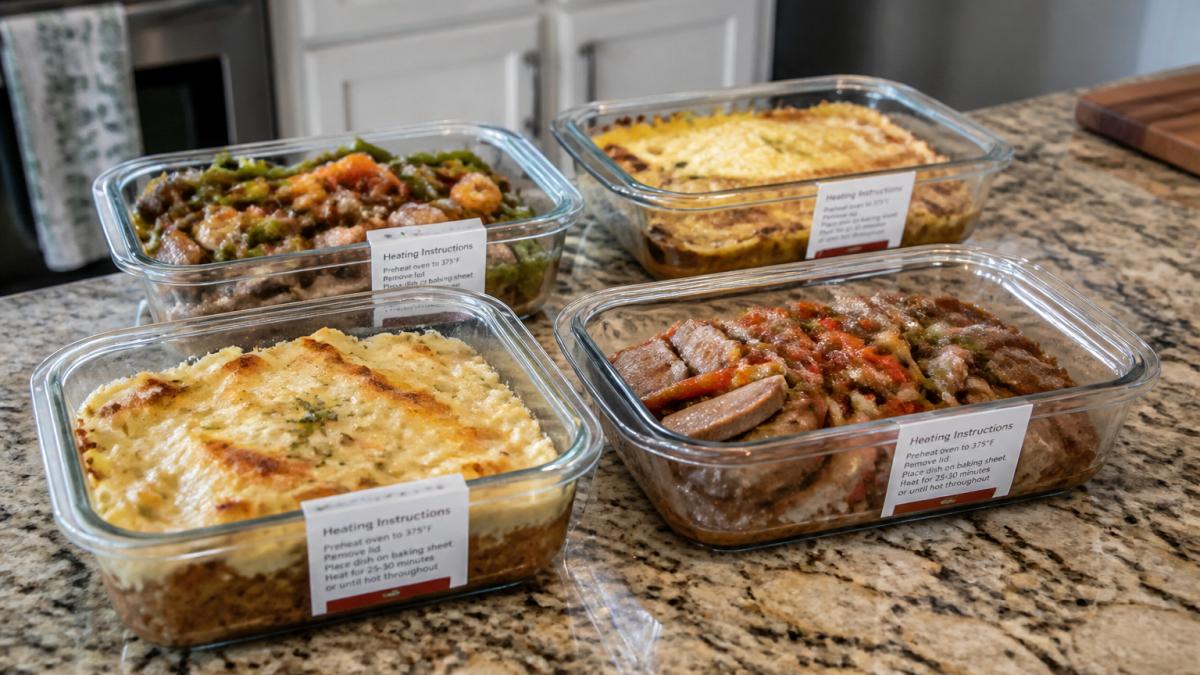
Ready-to-heat meals are fully prepared entrées that arrive cooked and refrigerated, requiring only reheating at home. They differ fundamentally from meal kits, which provide raw ingredients requiring assembly and cooking: ready-to-heat meals save the actual cooking time, while meal kits save shopping time but demand your effort in the kitchen.
When examining a prepared meal menu, look for variety in cuisines, proteins, and dietary accommodations. A strong menu includes herb-roasted chicken, braised beef, vegetarian pasta, and seafood preparations that demonstrate cooking skill and ingredient quality. Daily rotation prevents menu fatigue and shows the kitchen isn't reheating the same five meals repeatedly.
Chef-designed meals feature flavor combinations and techniques you wouldn't attempt on a weeknight, giving you restaurant-quality execution with the convenience of home heating. Ask about seasonal specials and whether the chef accepts custom requests for upcoming weeks.
Setting Up Your Weekly Meal Prep Pickup Schedule
Establishing a weekly pickup routine means coordinating with your provider about their ordering system and collection windows. Most businesses set a weekly ordering deadline, typically mid-week, to prepare meals for weekend or early-week pickup. Knowing this timeline prevents missed windows.
Consider your household's actual eating patterns. If you cook Monday through Wednesday and order out Thursday onward, order meals accordingly rather than preparing for the entire week. This respects the freshness of prepared meals while matching real behavior.
Discuss flexibility upfront; knowing you can adjust orders without penalty makes weekly ordering more practical.
Navigating the Prepared Meal Menu and Customization
Most prepared meal menus display the week's offerings several days in advance. When reviewing options, check not just the entrée but any included sides, sauces, or components. Some providers include vegetables and starches; others focus on the protein alone, requiring you to add sides at home.
Customization varies by provider. If dietary restrictions are central to your needs, confirm the provider's actual practices, not just their stated willingness to accommodate.
TO SEE OUR DAILY MENU CLICK HERE!(CONCORD COMMONS LOCATION ONLY) →
Read ingredient labels carefully, especially if anyone in your household has allergies or strict dietary preferences. Clear labeling should list all major ingredients and potential allergens, and providers serious about food safety make this information readily available.
Pickup Logistics: Deadlines, Collection Windows, and Storage
Successful pickup depends on understanding the operational details. Most providers set firm ordering deadlines, typically 48 to 72 hours before pickup, to allow ingredient sourcing and preparation. Missing this deadline means waiting until the next cycle, so set phone reminders.
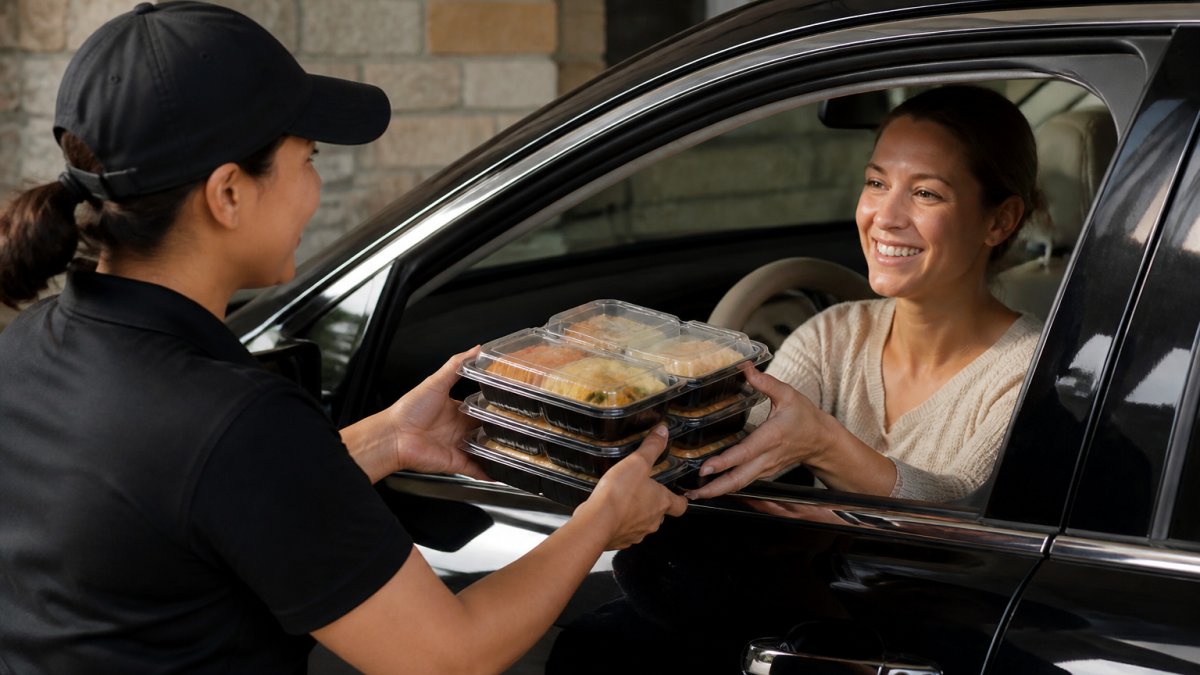
Collection windows typically span several hours on specific days, such as 4 PM to 7 PM on Thursdays and Saturdays. Arriving during this window ensures peak freshness and staff availability for questions about heating instructions or ingredients.
When you collect your meals, inspect them briefly: containers should be sealed and cold to the touch. Ask about storage if anything is unclear, how long meals stay fresh, whether freezing is an option, and what the heating instructions recommend. Most chef-prepared meals stay fresh 3 to 5 days refrigerated, though this varies by dish.
Pickup vs. Delivery: Cost and Convenience Comparison
The right fulfillment method depends on four variables: service fees, order minimums, travel time, and how much your time is worth. Run the numbers before defaulting to one option.
The cost side
Delivery pricing usually stacks several charges:
- A delivery fee, commonly in the $5-$12 range per order for local meal services
- A service or small-order fee, sometimes triggered below a minimum like $35 or $50
- A driver tip, typically 10-20% of the order
- Possible surge or peak-window pricing during busy dinner hours
Pickup typically strips all four. That means a $60 weekly order can cost $10-$20 less when collected in person. Over a year of weekly orders, that difference is meaningful.
The convenience side
| Factor | Pickup | Delivery |
|---|---|---|
| Cost per order | Menu price only | Menu price plus fees and tip |
| Timing control | You choose when within the window | Arrival window set by the provider |
| Food temperature | You control transport time | Depends on driver route and stops |
| Order accuracy | You inspect before leaving | You discover issues after the driver leaves |
| Flexibility | Must be available during the window | Can receive while doing other tasks |
| Minimum order | Often none | Often $35-$50 |
When pickup is the better call
- You work or live within a short drive of the pickup location
- You order weekly and want to avoid recurring fees
- You want to inspect containers, check seals, and read labels before accepting the food
- You need to ask staff about allergens, substitutions, or reheating
When delivery is the better call
- The round trip would take more than about 40 minutes
- You have a scheduling conflict during every pickup window
- You're ordering a single meal rather than a weekly plan, so the fee is a one-time cost
- You're recovering from illness, caring for someone, or otherwise unable to leave home
The hybrid approach
Many households use both: pickup for the weekly plan and delivery for a one-off order during a busy week. Ask your provider whether they offer both, and whether delivery fees are waived above a certain order total. Some do; many don't advertise it.
A simple decision test
Write down three numbers: your round-trip drive time, the provider's delivery fee plus expected tip, and your realistic hourly value. If drive time times your hourly value is less than the delivery fee plus tip, pick up. If it's more, have it delivered. For most weekly orders within a 15-minute drive, pickup is the lower-cost and more controllable option.
Food Safety and Keeping Meals Fresh After Collection
Proper storage impacts both food safety and meal quality. Chef-prepared meals arrive refrigerated and should go straight into your refrigerator when you get home. Don't leave them at room temperature or in a warm car for extended periods.
Most prepared meals remain safe and delicious for 3 to 5 days refrigerated at 40°F or below.
Freezing extends shelf life if you're not eating meals immediately. Transfer meals to freezer-safe containers, or leave them in original containers if freezer-safe, which most quality providers use. Frozen prepared meals maintain quality for 2 to 3 months.
Follow heating instructions precisely. Most oven-safe containers allow direct oven reheating at 350°F for 15 to 25 minutes, depending on density. Some providers recommend removing meals and reheating in your own cookware.
Ordering chef-prepared meals for pickup transforms weeknight dinner from stress into genuine convenience. When you choose a provider like Leo's Gourmet Market that prioritizes fresh preparation and quality ingredients, you're not compromising on taste or nutrition, you're reclaiming time.
Frequently Asked Questions
How far in advance should I order chef-prepared meals for pickup?
Check your local provider's ordering deadline, which is typically displayed on their website or when placing an order. Weekly meal prep pickup services often have set cutoff times, usually midweek for the following week's meals. Confirm the collection window and any minimum order requirements before committing to your order.
How do I verify pickup availability in my ZIP code?
Visit your local prepared meals provider's website and enter your ZIP code or neighborhood to confirm service. Many providers display pickup locations, available collection times, and current menu options by area. If ordering online, the system will show whether your address qualifies for pickup. Call directly if the website doesn't show your location.
How long can I keep prepared meals fresh after pickup?
Most chef-prepared, refrigerated meals stay fresh for 3-5 days when stored properly in the coldest part of your refrigerator at 40°F or below. Check the label for the specific use-by date, which accounts for preparation time and ingredients. Store meals in their original sealed containers until reheating. If you won't use them within 2-3 days, freeze them immediately, most heat-and-eat meals freeze well for up to 3 months and can be reheated from frozen.
Are chef-prepared pickup meals ready to eat, or do they need reheating?
Most chef-prepared meals are fresh and refrigerated, requiring reheating before serving, typically 15-25 minutes in the oven or microwave depending on the dish. Each meal comes with clear heating instructions on the label. Some providers offer truly ready-to-eat options, but the majority are designed as heat-and-eat for food safety and quality. Always follow the provided reheating instructions to ensure proper temperature and best flavor.