 Listicle
Why Choose Artisan Prepared Food Services?
Last Updated: November 2, 2026
Quick Summary
Artisan prepared food is ready-to-eat or ready-to-heat meals cooked in small batches by trained cooks from whole ingredients and scratch recipes. Its main advantage is that it removes nightly cooking, shopping and cleanup while giving you cooked food you can check.
- Small-batch cooking means a kitchen makes dozens of portions, not thousands of identical pouches.
- Ask who writes the recipes and whether meals are cooked in-house or assembled from suppliers.
- Prepared meals suit nights when time or energy is short, not necessarily every household.
- Check ingredient labels, allergen statements and keep-by guidance printed on each container.
- Compare total weeknight cost, including shopping time, spoilage and delivery fees, not just the menu price.
Table of Contents
- What Artisan Prepared Food Actually Means in Practice
- Benefits of Food Delivery for Busy Households
- Prepared Meals vs. Meal Kits: Which Fits Your Week?
- Food Quality, Sourcing, and Freshness You Can Check
- Dietary Needs, Allergens, and Customization
- Cost Comparison: Artisan Meals vs. Cooking From Scratch
- How to Choose an Artisan Meal Service for Your Household
- Booking Your First Order With Leo's Gourmet Market
- Frequently Asked Questions
What Artisan Prepared Food Actually Means in Practice
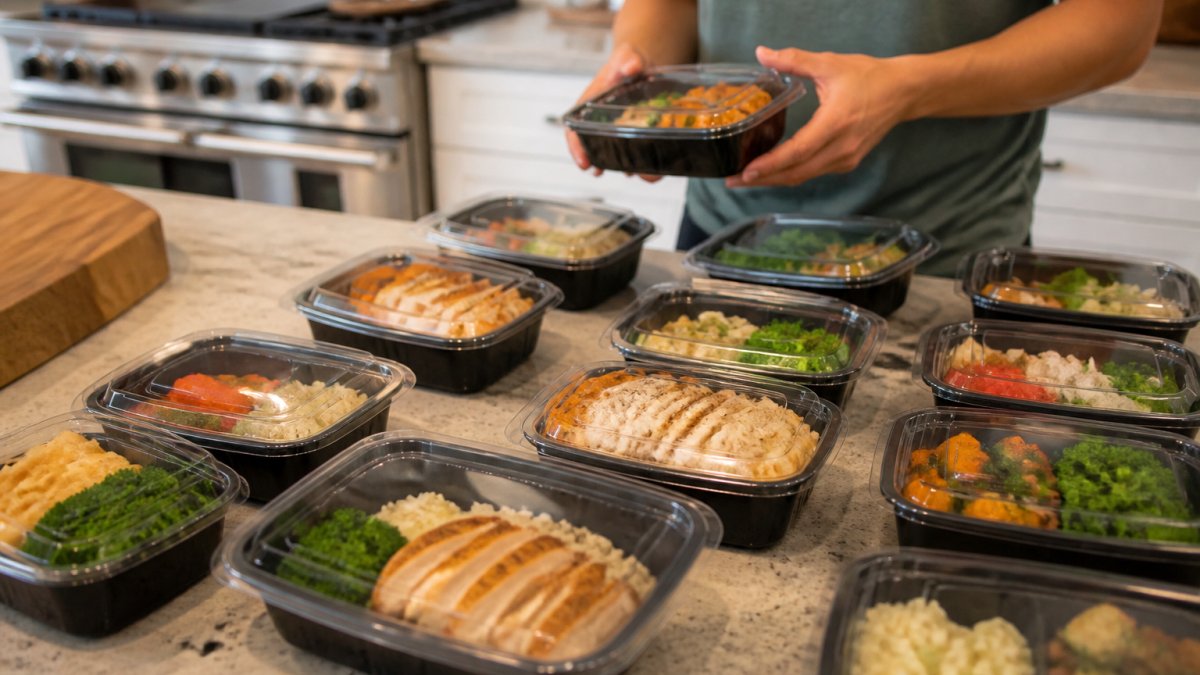
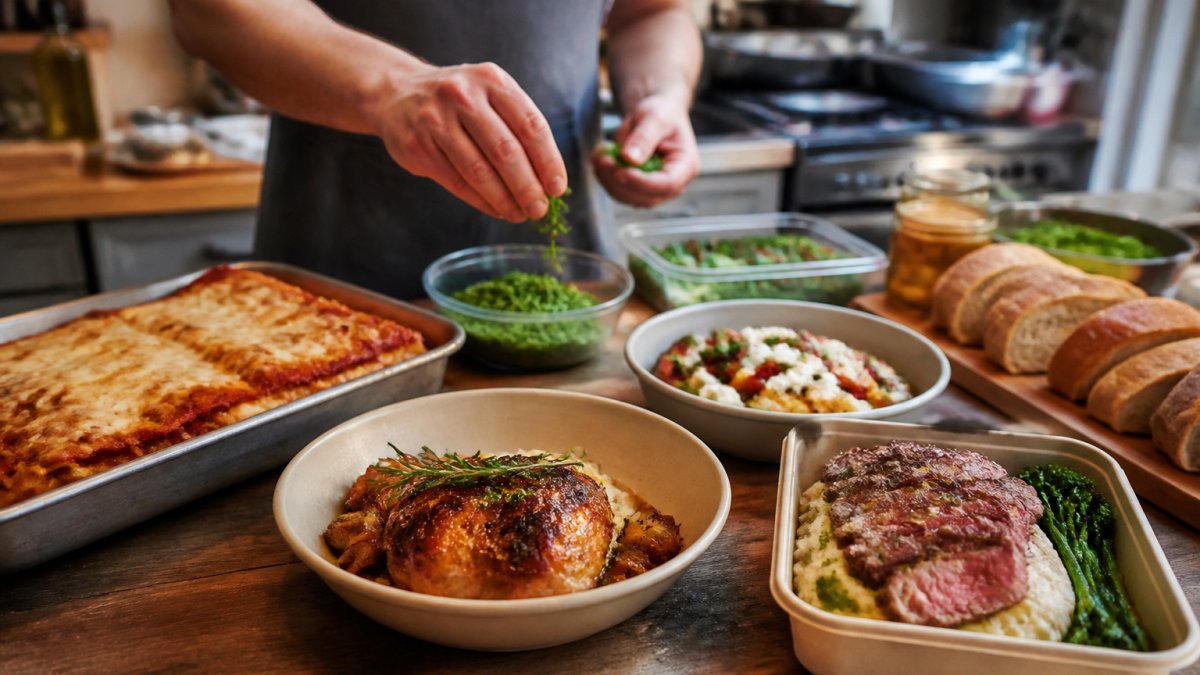
Artisan prepared food is ready-to-eat or ready-to-heat meals cooked in small batches by trained cooks, using whole ingredients and recipes made from scratch. The label gets used loosely, so it helps to know what to look for. At Leo's Gourmet Market, our husband-and-wife team cooks a daily rotating menu of entrées and packs each one in an oven-safe container you can reheat at home.
Small-batch cooking changes what ends up on your plate. A kitchen that makes 40 portions of braised chicken is working differently than one that pours out 4,000 identical pouches. Menus that rotate also mean you are not eating the same dish every week.
Ask a provider a few direct questions before you commit. Who writes the recipes? Are meals cooked in-house or assembled from outside suppliers? Does the menu change, and how often? Clear answers tell you more than any marketing phrase.
Benefits of Food Delivery for Busy Households
Prepared meals take the nightly decision off your plate. When a weeknight dinner is already cooked, the time you would spend shopping, chopping and cleaning goes back to your family. That matters most on nights with practice, meetings or a late shift.

Consistency is another benefit. Prepared meals come in set portions, which makes planning easier than it is with a fridge full of partial ingredients that spoil before you use them.
Food delivery is not right for every household. Some families enjoy cooking and would rather spend an hour in the kitchen on a Sunday. Others find that prepared meals cut waste and stress. Know which group you fall into before you pay for a subscription.
Prepared Meals vs. Meal Kits: Which Fits Your Week?
A prepared meal arrives cooked. You reheat it, plate it and eat. A meal kit arrives as measured ingredients and a recipe card, and you do the cooking. Both save planning time, but they ask for very different amounts of effort on a weeknight.
Choose prepared meals if your main problem is time or energy at the end of a long day. Choose meal kits if you want to build cooking skills or enjoy the process and simply need help with planning and portioning.
The trade-off is cost and control. Prepared meals generally cost more per serving than cooking from raw groceries, but they remove the cleanup and the risk of wasted produce. Compare the actual per-serving price and the time each option saves you, not just the sticker price.
The two options differ mainly in how much cooking work they leave you, as summarised below.
| Option | Arrives as | Your effort | Best for |
|---|---|---|---|
| Prepared meal | Cooked, ready to reheat | Reheat and plate | Nights when time or energy is short |
| Meal kit | Measured ingredients and recipe card | You do the cooking | Building cooking skills and enjoying the process |
Food Quality, Sourcing, and Freshness You Can Check
Quality claims are easy to make and hard to verify, so focus on what you can check yourself. Read the ingredient labels and heating instructions printed on each container. A reputable provider should label allergens and tell you how long a meal keeps in the refrigerator.
Ask where the core ingredients come from and how they are handled. Look for specifics such as named proteins, fresh produce and house-made components. Leo's Gourmet Market offers artisan specialties such as handmade sausage, fresh mozzarella and artisan breads, which you can judge by taste and texture on your own table.
Freshness depends on how the food is cooled, packed and stored. Pick up or receive your order promptly, refrigerate it right away and follow the keep-by guidance on the label.
Dietary Needs, Allergens, and Customization
If you cook for a restriction such as gluten-free or vegetarian eating, you need specifics before you order. Many prepared-food kitchens are not allergen-free facilities, and a dish that sounds safe can still carry risk through shared equipment or shared prep surfaces. The practical question is not whether a provider offers a gluten-free option, it is how they prevent cross-contact and what they can verify.
Ask these questions before you rely on any service:
- Is the kitchen shared? If wheat, dairy, eggs, soy, tree nuts, peanuts, fish or shellfish are handled in the same kitchen, ask how equipment and surfaces are cleaned between batches.
- Are labels complete? A reputable provider labels the major allergens on each container and lists ingredients, not just marketing descriptions. Look for the allergen statement, not just the dish name.
- Who answers dietary questions? You want a person who knows the recipes and the kitchen, not a call center reading a script.
- What is the keep-by guidance? Storage and reheating instructions matter more for restricted diets because a mistake can be harder to detect.
Customization depends on the provider. Ask what is possible before you rely on it, and get the answer in writing if the restriction affects your health.
TO SEE OUR DAILY MENU CLICK HERE!(CONCORD COMMONS LOCATION ONLY) →
Leo's Gourmet Market offers a daily rotating menu, so you can plan around what is available that day. Check the current menu before you assume a particular dish will be on offer, and contact us directly about any restriction that affects your health.
A final caution: if you have a severe allergy, treat any shared kitchen as a risk and confirm procedures directly with the provider. No menu description substitutes for a conversation with the people who cook your food.
Cost Comparison: Artisan Meals vs. Cooking From Scratch
Price is the question most people ask first, and the honest answer depends on your situation. Cooking from scratch usually costs less per serving in raw ingredient terms. Prepared meals add the cost of cooking labor, packaging and convenience. The useful comparison is not the sticker price of one dinner versus one meal, it is the total cost of getting a weeknight meal on the table.
Start with a per-serving benchmark. A home-cooked dinner built around a protein, a starch and a vegetable commonly lands in a wide range depending on what you buy and where you shop. Prepared meals from an artisan kitchen typically cost more per serving because you are paying for labor, small-batch production and packaging. Restaurant entrées sit higher still once you add tax, tip and delivery fees. The gap between prepared meals and restaurants is usually larger than the gap between prepared meals and home cooking.
Then count the costs that do not appear on a grocery receipt:
- Shopping time. A weekly trip plus a mid-week stop for forgotten items can consume several hours.
- Prep and cleanup. Chopping, cooking and washing pots add time to every meal.
- Spoilage. Produce, dairy and proteins that go unused are a real cost. A household that throws away a portion of its groceries each week is effectively paying more per meal than the receipt suggests.
- Delivery and fees. Many services charge delivery fees, impose order minimums or add subscription charges. Ask for the all-in price, not the menu price.
- Packaging. Reusable or recyclable containers may carry a premium; single-use packaging carries a waste cost.
A fair comparison uses the same number of servings on both sides. If a prepared meal costs a certain amount per serving and replaces a home-cooked dinner that would have cost less in ingredients but more in time and waste, the prepared option may still be the better value for a busy household. For households that cook most nights and waste little, home cooking usually wins on pure cost.
Pricing for Leo's Gourmet Market depends on the items you choose, quantities, event dates and delivery arrangements, so we cannot quote a single figure here. Visit our website or contact us for current prices or a quote for your order. When you request a quote, ask for the per-serving cost including any delivery or packaging charges so you can compare it directly with your own grocery spending.
How to Choose an Artisan Meal Service for Your Household
Start by matching the service to your week. Note how many dinners you need, whether you need meals for two or for a crowd, and whether you need an occasional event order or a standing plan.
Then check the practical details: the menu variety, the labels and reheating instructions, how dietary needs are handled, and what a typical order looks like. Read reviews, but weigh them against what you can verify yourself.
Consider ordering a small sample first. A week of trial meals can tell you more about taste, portions and convenience than any description can.
Booking Your First Order With Leo's Gourmet Market
Ready to order? Start by checking what is on the menu today. Our daily menu lists the entrées we are cooking, so you can see what fits your household before you commit.
Planning a larger order or an event? Our catering menu shows the options available for gatherings of different sizes, which helps you plan quantities.
If you want a sense of how a chef-prepared meal service fits a busy Concord household, read our guide to the best chef-prepared meal services in Concord, NC for busy families. For dietary planning, see healthy gluten-free dinner options in Concord. When you are ready to place an order, our step-by-step guide to ordering chef-prepared meals for pickup walks you through the process.
Contact us with questions about timing, quantities and dietary needs. We are a family-owned market, and we are glad to help you find the right order for your week.
Frequently Asked Questions
How do I know the meals will taste homemade and not like typical prepared food?
Artisan prepared food is cooked in small batches from recipes built around fresh ingredients rather than long-shelf-life components. Ask a provider how often the menu changes and who develops the recipes. Leo's Gourmet Market is a family-owned shop where the husband and wife team prepares a daily rotating menu of freshly made entrées, which makes it easier to judge the quality yourself by tasting a few items over several weeks.
Do artisan prepared food services accommodate gluten-free and vegetarian diets?
Many can, but the details matter. Ask whether a menu item is made without gluten-containing ingredients or simply labeled that way, and whether shared prep surfaces could introduce cross-contact. Vegetarian options are usually easier to confirm from ingredient labels. Clear ingredient labels on each entrée help you check allergens before you buy. For a specific restriction, contact the shop directly before ordering so the staff can confirm current preparation practices.
How long can I keep prepared meals in the refrigerator?
Refrigerate prepared meals promptly and follow the storage guidance printed on each label. Food safety guidance from the U.S. Department of Agriculture generally recommends eating refrigerated leftovers within three to four days. If you won't eat a meal in that window, freeze it, and reheat it to an internal temperature of 165 degrees Fahrenheit. Check the label for any product-specific instructions, since they take precedence over general guidance.
Is it cheaper to buy ingredients and cook at home?
It depends on how much time and waste you are comparing. Raw ingredients look cheaper per item, but a full home-cooked dinner also requires planning, shopping, prep time, and leftover ingredients that spoil. Pricing for prepared meals depends on quantity, dates, and delivery, so check Leo's Gourmet Market's website for current prices or request a quote. Comparing the full cost of a finished meal against your real grocery and time costs gives a fairer answer for your household.