 Comparison
5 Ways Artisan Bread Compares to Store-Bought
Last Updated: November 8, 2026
Quick Summary
Artisan bread is not healthier by default. Many artisan loaves use refined white flour and can carry as many calories and carbohydrates as a packaged slice. The fairest comparison matches flour type and serving weight, then checks fiber, sodium, and added sugars on the label.
- Convert both loaves to a common weight, such as 50 grams, before comparing nutrition.
- Look for 100% whole wheat or whole grain listed as the first ingredient.
- Check the added-sugars line, since some bakery loaves use honey, malt, or sugar.
- Artisan loaves can be as salty as packaged ones, so compare sodium per serving.
- Long fermentation may offer modest digestive and blood sugar benefits, but evidence varies.
Table of Contents
- Artisan, Bakery, Homemade, or Store-Bought: What the Terms Actually Mean
- Is Artisan Bread Healthier Than Store-Bought? A Like-for-Like Nutrition Comparison
- Bread Ingredients and Preservatives: What Goes Into Each Loaf
- Whole-Grain Bread Nutrition: How to Spot a Real Whole-Grain Loaf
- Fermentation, Digestibility, and Blood Sugar: What the Evidence Shows
- The Downsides of Homemade Bread: Time, Consistency, and Food Safety
- Choosing the Right Loaf for Your Family's Diet and Schedule
- Frequently Asked Questions
Artisan, Bakery, Homemade, or Store-Bought: What the Terms Actually Mean
Leo's Gourmet Market helps Concord families decide what goes on the dinner table, and bread is one of the first questions customers bring up. Is artisan bread healthier than store bought? The answer depends on what each term actually describes, and those labels are used more loosely than most shoppers realize.
These categories overlap more than the packaging suggests. A bakery loaf can be artisan in method and still contain a long ingredient list. The label "artisan" has no single fixed meaning, so the most reliable way to judge a loaf is to read it.
Is Artisan Bread Healthier Than Store-Bought? A Like-for-Like Nutrition Comparison
Artisan bread is not healthier by default. Many artisan loaves are made from refined white flour, salt, water, and yeast, and a generous slice can carry as many calories and carbohydrates as a packaged slice. What artisan bread often offers is a shorter, more recognizable ingredient list, which can make it easier to understand what you are eating.
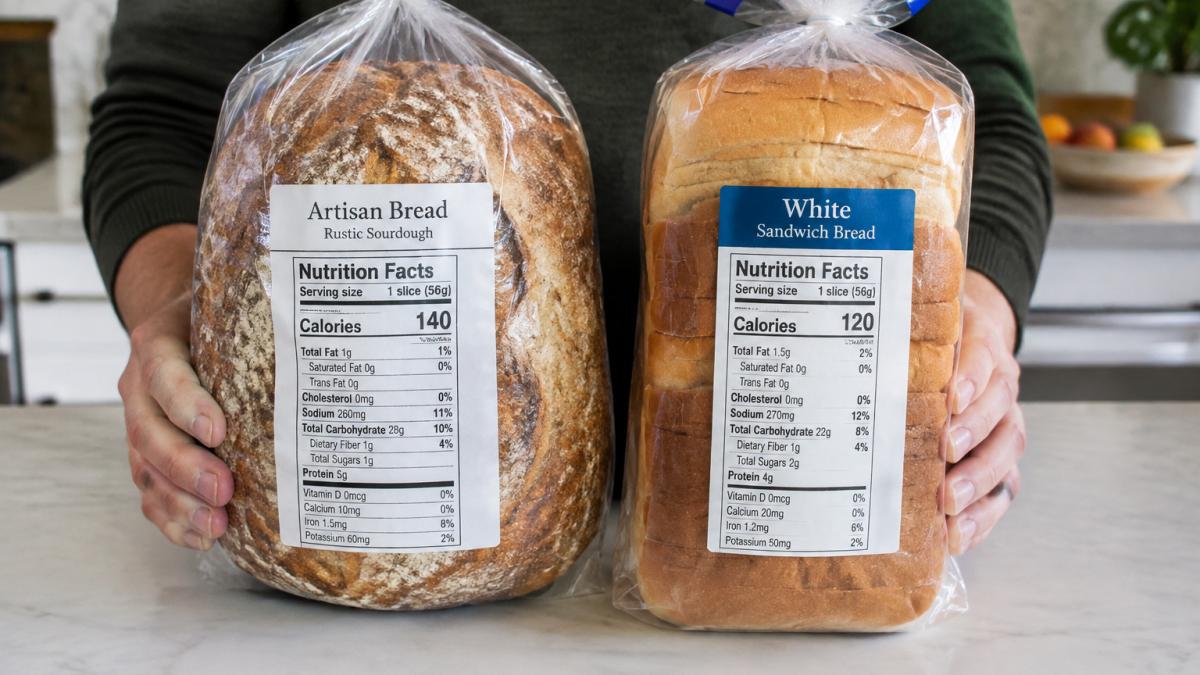
The fairest comparison puts similar products side by side. Compare a plain sourdough to a plain sandwich loaf, or a whole-grain artisan boule to a whole-grain packaged loaf. Matching the type of flour and the serving size gives a clearer picture than comparing a dense country loaf to a soft white sandwich bread.
According to the U.S. Department of Agriculture's FoodData Central database, nutrient values for bread vary widely by type, so the nutrition facts on any individual loaf matter more than the category it belongs to. USDA FoodData Central bread nutrient database
Reading Serving Sizes and Nutrition Labels Side by Side
Start with the serving size, because it is the number that makes or breaks the comparison.
Next, check calories, fiber, added sugars, and sodium per serving. Then compare the protein and fiber amounts to see which loaf offers more nutrition for the same portion.
Added sugars deserve their own look. The Nutrition Facts label separates total sugars from added sugars, and that added-sugars line is the one to watch.
Fiber is where whole-grain choices separate themselves. A 100% whole-wheat loaf generally delivers more fiber per slice than a white-flour loaf of the same weight, whether it is artisan or packaged.
Watch out: a label that says "wheat bread" or "multigrain" can still be mostly refined flour, so the serving-size comparison only works after you confirm both loaves are the same grain type.
A Practical Side-by-Side Method
- Weigh or estimate a 50-gram portion of each loaf.
- Record calories, fiber, protein, sodium, and added sugars for that portion.
- Compare the ingredient lists for flour type and added sweeteners.
- Note the shelf life and storage instructions, since a preservative-free loaf may need freezing.
This method turns a vague category question into a specific, label-based decision. Two loaves of the same weight and grain type can differ meaningfully in fiber and sodium, and the label, not the word "artisan," tells you which is which.
The article recommends comparing loaves on the same basis, so here is a quick scan of the key label checks.
| Check | What to look for | Why it matters |
|---|---|---|
| Serving size | Convert both loaves to 50 grams | Thick artisan slices can weigh twice a packaged slice |
| Added sugars | Added-sugars line on the label | Some bakery loaves use honey, malt, or sugar |
| Fiber | Grams per 50-gram serving | Whole-grain loaves generally deliver more fiber |
| Sodium | Salt level per serving | Artisan loaves can be as salty as packaged ones |
| Grain type | Whole grain listed first | Multigrain and wheat labels may still be refined flour |
Bread Ingredients and Preservatives: What Goes Into Each Loaf
The ingredient list tells you more than the front label does. A traditional artisan loaf typically lists flour, water, salt, and yeast, sometimes with a starter. Packaged sandwich breads often include added sugar or high-fructose corn syrup, dough conditioners, emulsifiers, and calcium propionate or other preservatives to slow mold.
Preservatives are not automatically a problem. They help prevent spoilage and waste, which matters for food safety. The real question is whether you want them, and how often you eat the product. Many people prefer preservative-free bread because it spoils faster but contains fewer additives.
Watch for added sugar in both categories. Some bakery and artisan-style breads contain honey, malt, or sugar for flavor and browning, which can push a loaf's sugar content higher than expected.
Whole-Grain Bread Nutrition: How to Spot a Real Whole-Grain Loaf
"Multigrain," "wheat," and "100% wheat" do not mean whole grain. Multigrain simply means several grains, which may all be refined. Wheat bread is often made from refined white flour with a little bran added back.
To find a real whole-grain loaf, look for "100% whole wheat" or "whole grain" as the first ingredient. The Whole Grains Council offers a stamp system that helps identify products with a meaningful amount of whole grain. Whole Grains Council whole grain stamp guidance
Artisan loaves can be whole grain too. A whole-wheat sourdough with visible bran flecks often delivers more fiber than a white artisan boule, even though both came from a small bakery.
Fermentation, Digestibility, and Blood Sugar: What the Evidence Shows
Long fermentation is one of the most cited differences between artisan and store-bought bread, and it is also one of the most oversold. During fermentation, yeast and bacteria break down some starches and proteins, which may change how the bread feels in the stomach and how quickly its carbohydrates are absorbed. That mechanism is real. What varies is how much of it happens in any given loaf.
What Fermentation Actually Changes
In a sourdough starter, wild yeast and lactic acid bacteria work together. The bacteria produce acids that lower the dough's pH, and those acids activate enzymes that partially break down starch and gluten. A longer, cooler fermentation gives those enzymes more time to work.
The practical effects most bakers point to are modest: a chewier crumb and a tangier flavor. Some small studies suggest that sourdough fermentation can slow the rise in blood glucose after eating compared with fast-fermented white bread, but the results vary with flour type, fermentation time, and portion size. National Institutes of Health research on bread fermentation and glycemic response
A long-fermented white loaf is still a refined carbohydrate, and people managing blood sugar should pay attention to portion size and what they eat alongside it. The grain type usually matters more than the fermentation method for fiber and overall nutrition.
How to Tell a Long-Fermented Loaf
The word "sourdough" on a label does not prove a long fermentation. Some commercial sourdough-style breads use added yeast plus a sourdough flavoring or a small amount of starter for taste. Look for clues in the ingredient list and the crumb:
- An ingredient list with just flour, water, salt, and a starter (no commercial yeast) is a stronger signal of a naturally leavened loaf.
- A tight, glossy crumb with irregular holes and a pronounced tang usually points to a longer ferment.
- A bakery that publishes its fermentation schedule, or a baker who can tell you how long the dough rested, is more reliable than a front-label claim.
Watch out: "sourdough" is not a regulated term, so a loaf can carry the name without a long fermentation, and a fast-fermented loaf can still be a perfectly good bread.
Who Should Be Cautious
People with celiac disease or a diagnosed gluten-related condition should not assume that long fermentation makes bread safe. Fermentation reduces some gluten fragments but does not remove gluten, and the FDA's gluten-free labeling rule sets a strict threshold that ordinary sourdough does not meet. FDA gluten-free labeling guidance Anyone managing blood sugar should treat any bread as a carbohydrate source and focus on portion size, whole-grain content, and what accompanies the slice.
The balanced takeaway: long fermentation may offer modest digestive and glycemic advantages, but it is one factor among several. Flour type, portion size, and the rest of the meal usually matter more than the fermentation method alone.
The Downsides of Homemade Bread: Time, Consistency, and Food Safety
Homemade bread gives full control over ingredients, but it has real trade-offs. A proper artisan loaf can take a full day from mixing to baking, and results depend on temperature, flour absorption, and oven performance. Many home bakers end up with dense or uneven loaves while learning.
Food safety matters too. Homemade bread without preservatives can grow mold within a few days at room temperature. Store it in a breathable bag at room temperature for a day or two, or freeze slices for longer storage. Keep flour and yeast in airtight containers, and follow safe handling practices for any fillings or toppings. The USDA's food safety guidance covers general storage principles that apply to baked goods. USDA Food Safety and Inspection Service guidance on food storage
Cost and time are the other limits. Buying quality flour, a good scale, and a proofing setup adds up, and most busy families cannot bake daily.
Choosing the Right Loaf for Your Family's Diet and Schedule
The right loaf depends on what your household needs. If you have time on weekends and want to control every ingredient, baking artisan bread at home can be rewarding. If your weeknights are packed, a well-chosen bakery or store-bought whole-grain loaf is often the more practical option.
Start by reading labels. Choose loaves with whole grains listed first, minimal added sugar, and a short ingredient list you recognize. For those who want artisan bread without the baking, Leo's Gourmet Market offers artisan breads alongside its daily menu. Customers can see current options on the daily menu before they visit, and those who prefer a ready-to-eat lunch can explore handcrafted sandwiches that pair well with fresh bread.
Families with specific dietary needs have other options to weigh. Our healthy gluten-free dinner options in Concord can help when a loaf is not the right fit, and ordering fresh artisan bread online is a practical way to get loaves without a trip to the counter. For a broader look at what the artisan difference means for busy households, our guide why choose artisan prepared food services explains how the approach works day to day.
The bottom line: artisan bread is not automatically healthier, but it can be a good choice when you read the label, pick whole grains, and match the loaf to your schedule.
Frequently Asked Questions
Is artisan bread better for you than regular bread?
Not automatically. Artisan bread often uses fewer additives and may ferment longer, but many loaves are made with refined white flour and plenty of salt. Compare the nutrition label per serving: look at fiber, added sugar, sodium, and whether the first ingredient is a whole-grain flour. A store-bought whole-grain loaf can outperform a white artisan loaf on fiber, while a well-made sourdough can be a strong choice for people who prefer simple ingredients.
Is homemade bread healthier than store-bought bread?
It can be, because you control the flour, sugar, salt, and fat. Homemade bread also avoids preservatives and dough conditioners. However, a homemade white loaf with added sugar is not healthier than a store-bought whole-grain loaf. The nutritional outcome depends on the recipe. Use the same label-reading approach you would use in a store to compare calories, fiber, and sodium per slice.
What should you look for on a bread nutrition label?
Start with the serving size, since many loaves list two slices as one serving. Check fiber (aim for at least 3 grams per serving for a whole-grain bread), added sugars, and sodium. In the ingredient list, the first item should be a whole-grain flour such as 'whole wheat flour' rather than 'enriched wheat flour.' Shorter ingredient lists usually mean fewer additives, but length alone does not determine healthfulness.
Is homemade bread good for weight loss?
Homemade bread gives you control over portion size and ingredients, which helps, but it is still a calorie-dense food. Focus on whole-grain versions and pair slices with protein and vegetables to feel full longer.