 Comparison
Is Meal Prep Cheaper Than Cooking? 7 Cost Facts
Last Updated: November 10, 2026
Quick Summary
Meal prep is usually cheaper than cooking from scratch every night, because batch cooking spreads each ingredient package across more servings and cuts waste. The savings depend on planning the batch around ingredients you already buy and on how much of the food you actually eat. Track cost per edible serving for two weeks to confirm the meal prep cheaper result holds for your household.
- Batch-cooked meal prep often has the lowest ingredient cost per serving.
- Cooking fresh for two can leave part of a bunch or bag unused, which is where money leaks.
- Prepared meals and takeout usually cost more per serving than home cooking.
- Subtract food you throw away, because a low per-serving figure means little if it spoils.
- Count time, energy, containers and storage as hidden costs when comparing approaches.
Table of Contents
- Is Meal Prep Cheaper Than Cooking From Scratch Each Night?
- Cost Per Serving: A Like-for-Like Breakdown
- The Cheapest Way to Meal Prep Without Wasting Food
- Is It Cheaper to Eat Out or Cook for One Person?
- Time, Energy, and Equipment: The Hidden Costs
- Easy Weeknight Dinner Ideas for Families Built Around One Prep Day
- Booking Your Next Week of Ready-to-Heat Dinners in Concord
- Frequently Asked Questions
Is Meal Prep Cheaper Than Cooking From Scratch Each Night?
Meal prep is usually cheaper than cooking from scratch every night, but only when you plan the batch around ingredients you already buy, since that is what keeps the meal prep cheaper in practice. A single weekly cooking session yields portions you can reheat on busy evenings without buying takeout. The advantage is less about any one ingredient and more about how often you reach for the car keys.
The real question is whether a cooking session that yields four to six servings costs less per serving than cooking a fresh dinner each night. Often it does, because you buy larger quantities, cook once, and waste less of what you purchase. The answer depends on how you shop, how much you throw away, and what you would otherwise eat.
Many households find the math shifts once they count weekday takeout. A weekly prep session can replace several ordered dinners, and that gap is where the savings tend to show up most clearly. For a step-by-step method for planning and portioning meals for a busy household, see practical meal prep guide.
Cost Per Serving: A Like-for-Like Breakdown
The only fair comparison holds the meal constant. Pick one dinner, say chicken, rice, and roasted vegetables, and cost it four ways using the same portion size: batch-cooked meal prep, cooked fresh each night, a store-bought prepared meal, and a casual restaurant or takeout order. Then divide each total by the number of servings it actually produces. That per-serving figure, not the weekly grocery total, is what answers the question.
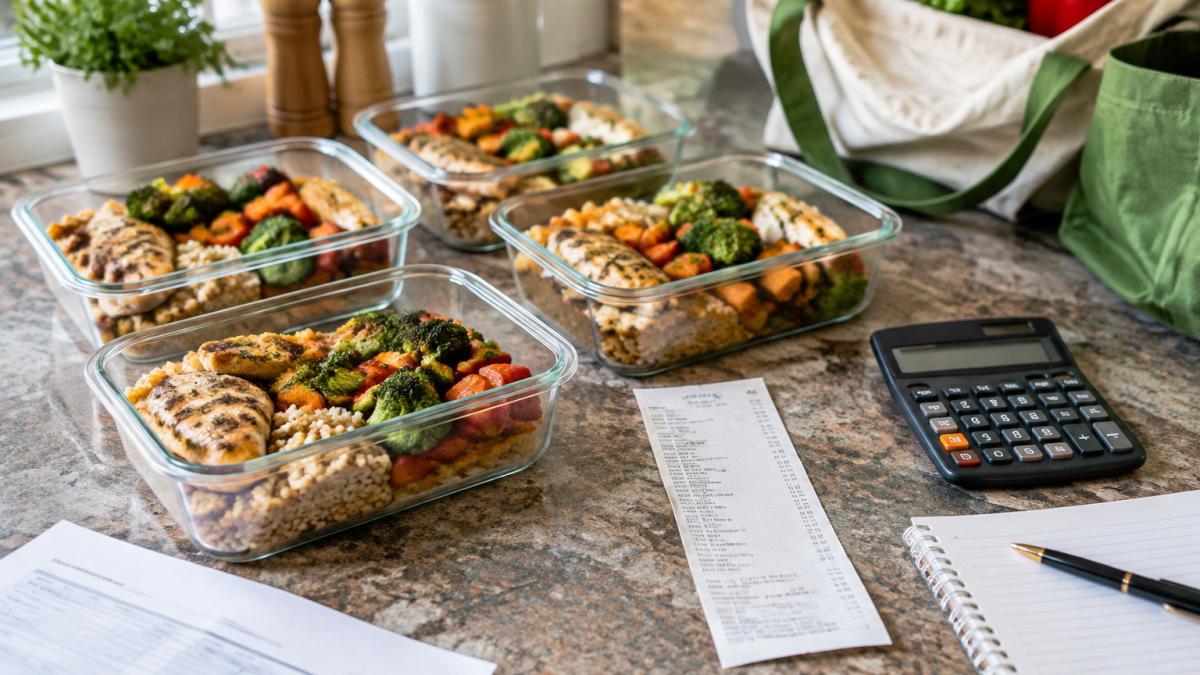
A transparent model needs stated assumptions, because the result swings on them. Write down four inputs before you compare: (1) the portion size in ounces or cups, (2) the store and week you priced ingredients, (3) whether you count pantry staples you already own, and (4) whether you assign any dollar value to your cooking time. Change any one and the ranking can flip. The batch-cooked version often wins on ingredient cost per serving, while prepared meals and takeout tend to cost more, and daily scratch cooking can land in between once waste and extra shopping trips are counted.
Here is the mechanism behind the gap. Batch cooking spreads a package across more servings, so the cost per serving falls toward the unit price you paid. Cooking fresh for two can leave part of a bunch of celery, a bag of rice, or a pack of chicken unused, and that remainder is where money can leak. The same recipe portioned into five containers instead of two lowers cost per serving mainly through fuller use of each package, not through any magic in the container.
Run the arithmetic on your own receipt rather than trusting a rule of thumb. Total the ingredients for one recipe, divide by the servings it yields, then add a small per-serving allowance for energy and packaging (covered in the hidden-costs section). Compare that number with the menu price of the same dish divided by the servings you would actually get from it. Keep a column for "cost per serving" and a second for "cost per edible serving", the second subtracts anything you throw away, and it is the honest number.
Watch out: a low per-serving figure is meaningless if a third of the batch spoils before you eat it, so track what actually gets eaten for two weeks before you conclude meal prep is cheaper for your household.
The article breaks down cost per serving with a like-for-like comparison of the main approaches:
| Approach | Cost per serving | Key factor |
|---|---|---|
| Batch-cooked meal prep | Often lowest on ingredients | Spreads each package across more servings |
| Cooked fresh each night | Can land in between | Waste from partly used ingredients |
| Store-bought prepared meal | Usually higher | Convenience costs more |
| Restaurant or takeout | Usually highest | Eating out almost always costs more |
The Cheapest Way to Meal Prep Without Wasting Food
Start with a simple plan: choose two or three base recipes, build a shopping list from them, and cook everything in one session. Pick proteins and vegetables that share a cooking method, so the oven or stovetop handles the whole batch at once.
Label every container with the date and portion count. Refrigerated cooked food is generally best eaten within three to four days, and frozen portions keep much longer.
A common mistake is preparing too many different dishes. Variety feels appealing on Sunday, but five separate recipes mean five sets of ingredients, more leftovers, and more cleanup.
Is It Cheaper to Eat Out or Cook for One Person?
Eating out almost always costs more per meal than home cooking, and cooking for one person costs more per portion than cooking for a household. Cooking for a single eater means you buy whole packages of ingredients and use only part of them.
Meal prep can close that gap. Portioning a single recipe into several containers spreads the ingredient cost across more meals, even for one person. The result is usually cheaper than takeout and often close to the cost of cooking fresh, once waste is controlled.
Time, Energy, and Equipment: The Hidden Costs
Money is only half the ledger. The other half is time, energy, storage, and equipment, and this is where most comparisons stop short. Build the full cost by adding four lines to your per-serving math.
Time. A single prep session of two to three hours can replace four or five evenings of shopping, cooking, and cleaning. Whether that counts as a saving depends on how you value the hours. For tips on reheating prepared food so it stays moist and tasty, see how to reheat gourmet meals well. A practical approach is to assign your time a rate you would accept for extra work, multiply it by the hours saved, and see whether the per-serving savings still beat the alternative. For many households the time saving is the larger benefit; for others, especially anyone who enjoys cooking nightly, the dollar savings carry the decision. State your assumption either way so the comparison stays honest.
Energy. Oven and stovetop use is the main variable. Running an oven for a long batch session uses more energy in one block than a single night's dinner, but it replaces several separate cooking sessions, so the per-meal energy often comes out similar or lower. Refrigeration and freezer space add a small ongoing draw. If you already run a refrigerator, the marginal cost of filling it is modest; a dedicated chest freezer changes the math and should be counted if you buy one for meal prep.
Equipment and containers. Glass or BPA-free containers, freezer bags, and labels are a real startup cost, and lids crack and containers get lost. Budget for replacement rather than treating the first purchase as permanent. If you already own the containers and appliances, the added cost per serving is minimal; if you are buying a full set, spread that cost across the meals it will hold over its useful life.
Storage and food safety. Safe storage sets the batch size. Cooked food kept in the refrigerator is generally best eaten within a few days, and frozen portions keep much longer. Label every container with the date and portion count. Overfilling the refrigerator or freezer slows cooling and crowds shelves, which is its own hidden cost in spoilage.
Waste sensitivity. The result moves when you account for leftovers and unused ingredients. A batch that uses a whole bunch of celery and a full bag of rice wastes less than nightly cooking that uses part of each. Track what you throw away for two weeks and subtract it from the savings; that adjustment alone can erase a thin advantage.
Watch out: buying containers and a freezer before you know your real batch size is the most common way the hidden costs outrun the visible savings, so start with what you own and add equipment only after two weeks of actual prep.
Easy Weeknight Dinner Ideas for Families Built Around One Prep Day
A single prep day works well for families when the dinners share a base. Cook a large pot of grains, a tray of roasted vegetables, and one protein. Then assemble different meals across the week with sauces and toppings.
Good options include rice bowls with grilled chicken, pasta with a batch of meat sauce, and tacos built from shredded pork. Each uses overlapping ingredients, which keeps shopping simple and reduces waste.
For more family dinner ideas that work on busy nights, see Easy Weeknight Dinner Ideas for Families.
Booking Your Next Week of Ready-to-Heat Dinners in Concord
If cooking a full prep day does not fit your schedule, ready-to-heat meals can cover some of the same ground. Leo's Gourmet Market prepares a daily rotating menu of freshly made entrées designed for convenient home reheating, with heating instructions on each label.
Pricing depends on quantity, dates, and delivery, so visit the Leo's Gourmet Market website for current prices or a quote before planning your budget. To see what is available this week, visit the daily menu. For a broader look at local options, read Best Chef-Prepared Meal Services in Concord, NC for Busy Families.
Leo's Gourmet Market offers chef-crafted meals and artisan staples for busy households in Concord. Whether you cook a full prep day or need a ready-to-heat dinner, we can help you put good food on the table with less effort.
Frequently Asked Questions
Is meal prepping the cheapest way to eat?
Often, but not always. Batch cooking lowers the cost per serving because you buy staples like rice, dried beans, frozen vegetables, and larger cuts of meat in bulk, and you cook once instead of several times. The savings shrink if you throw food away or buy specialty ingredients for each recipe. Eating simple, repeatable meals made from pantry staples gives the biggest advantage. Track what you spend for four weeks to see whether your own numbers beat your current habits.
What is the cheapest way to meal prep?
Build meals around low-cost staples: dried beans, brown rice, oats, eggs, seasonal vegetables, and whole chickens or bone-in thighs. Buy store brands and larger packages when you will use them before they spoil, and freeze portions you cannot eat within three to four days. Cook two or three recipes that share ingredients, so one purchase supports several meals. Keep a running list of what you already have before each shopping trip to avoid duplicate purchases.
How do you calculate the cost per meal when meal prepping?
Add up the cost of every ingredient used in a batch, including oil, spices, and any packaging, then divide by the number of servings. Include a share of energy used for cooking if you want a full picture, though for most home cooks it is a small amount. Compare that figure with what you would pay for the same meal cooked fresh for one person or purchased ready-made. Using receipts from one week gives a more reliable number than estimates.
Does meal prepping actually save money or just time?
It can save both, but the money savings depend on how much food you waste and how often you would otherwise eat out. Households that cook large batches usually spend less per serving than those who buy single-portion groceries and cook fresh each night. Households that prep and then discard leftovers often end up spending more. The most reliable savings come from consistent use of the batch and from replacing takeout meals, not from the prep itself.